Best Coconut Cake Recipe Easy, Moist & From Scratch
Best Coconut Cake Recipe Easy, Moist & From Scratch
- Serves: 12 People
- Prepare Time: 40 minutes
- Cooking Time: 35 minutes
- Calories: -
- Difficulty: Easy
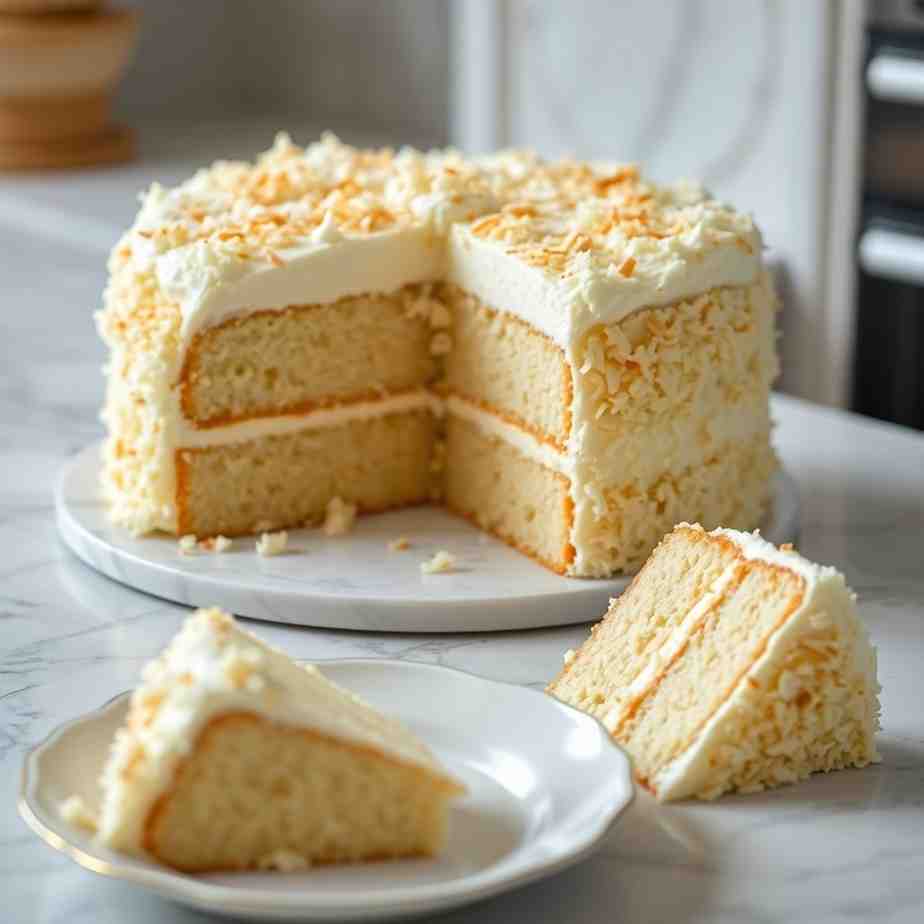
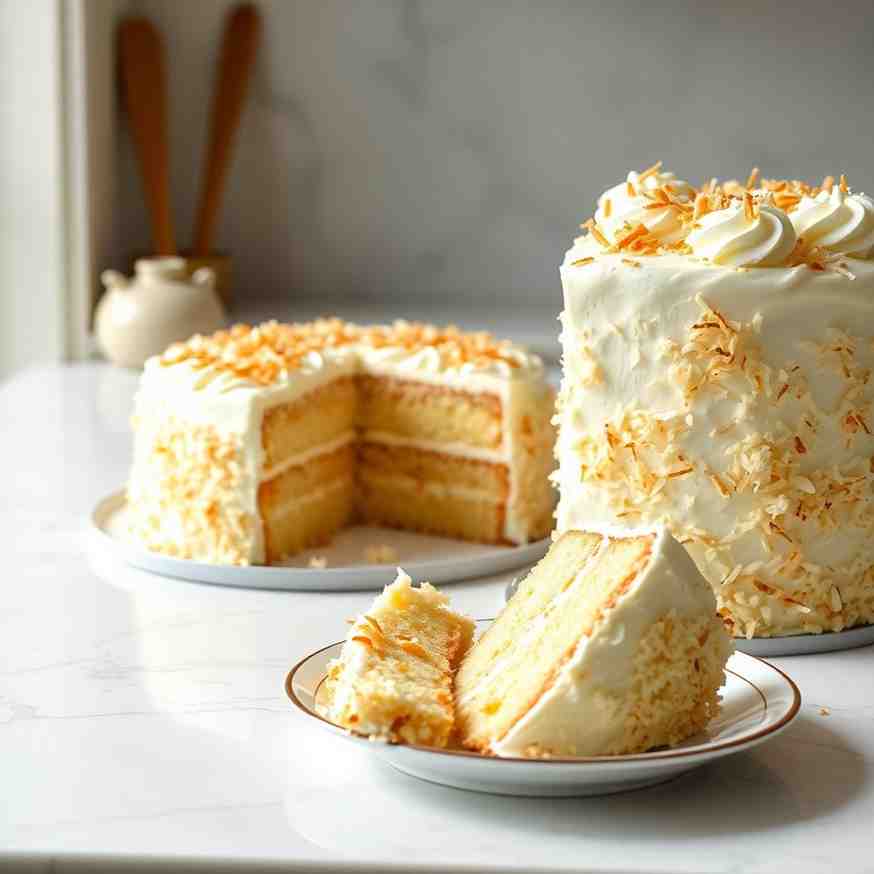
Get ready to bake the absolute best coconut cake you’ve ever tasted! If you're searching for a simple, super moist, and utterly delicious coconut cake recipe that tastes like a dream, you've found it. This isn't just any milk cake; it’s a showstopper designed to be easy enough for any home baker, yet impressive enough for special occasions. We’re talking a tender, fluffy crumb loaded with real coconut flavor, topped with a balanced, creamy coconut cream cheese frosting.
Forget dry, bland cakes or complicated steps. This recipe is made from scratch using ingredients you can easily find at your local US grocery store. It’s perfect for birthdays, Easter, summer cookouts, or simply when you need a truly sweet dessert. We’ve fine-tuned every detail to ensure a perfect balance of sweetness and a big, authentic coconut punch. Ready to discover the best coconut cake recipe and learn how to make coconut cake from scratch? Let's dive in!
Ingredients
Directions
- Prep Your Pans & Ingredients
Preheat & Prep: Preheat your oven to 350°F (175°C). Grease two 9-inch round cake pans, line the bottoms with parchment paper, then grease the parchment. Lightly flour the pans, tapping out any excess.
Room Temp: Ensure your butter, egg whites, coconut milk, and sour cream/buttermilk are all at room temperature. This helps them combine smoothly and creates a more uniform batter.
Shake the Milk: Give your can of coconut milk a good shake or whisk it in a separate bowl until it's smooth and fully combined, as the cream can separate.
- Mix the Dry Ingredients
- In a large bowl, whisk together the sifted cake flour, granulated sugar, baking powder, baking soda, and salt. Whisk for about 30 seconds to ensure everything is evenly distributed. (If your cake flour tends to be clumpy, a quick sift before measuring can help).
- Cream & Build the Wet Base
Cream Butter & Sugar: In the bowl of a stand mixer fitted with the paddle attachment (or using a large bowl and a hand mixer), beat the softened butter on medium speed until creamy, about 1 minute.- Add the granulated sugar and beat on medium-high speed for 3-5 minutes, until the mixture is light in color and fluffy. Scrape down the sides of the bowl as needed.
Mix in Liquids: Beat in the room temperature sour cream (or buttermilk), vanilla extract, and coconut extract (if using). The batter might look slightly curdled at this point – don't worry, it's totally normal and will smooth out. - Add Coconut Milk & Dry Ingredients
- With the mixer on low speed, alternate adding the dry ingredients mixture and the canned coconut milk to the wet ingredients. Start and end with the dry ingredients:
- Add 1/3 of the dry ingredients, mix until just combined.
- Add half of the coconut milk, mix until just combined.
- Add another 1/3 of the dry ingredients, mix until just combined.
- Add the remaining coconut milk, mix until just combined.
- Add the final 1/3 of the dry ingredients, mix until just smooth.
- Fold in the Coconut & Bake
Fold in Shredded Coconut: Remove the bowl from the mixer. Using a rubber spatula, gently fold in the sweetened shredded coconut until evenly distributed.
Divide & Bake: Divide the batter evenly between your two prepared cake pans. You can eyeball it or use a kitchen scale for precision.- Bake for 30-35 minutes, or until the tops are lightly golden and a wooden skewer or toothpick inserted into the center comes out with a few moist crumbs attached (not wet batter).
- Coconut Cream Cheese Frosting Ingredients
For the Coconut Cream Cheese Frosting:- 16 ounces (450g) full-fat cream cheese: Two 8-ounce blocks, softened to room temperature. Make sure it's brick-style, not spreadable.
- 1 cup (226g) unsalted butter: Two sticks, softened to room temperature.
- 4-5 cups (480-600g) confectioners’ sugar: Sifted, plus more if needed.
- 1 teaspoon pure vanilla extract: For classic flavor.
- ½ teaspoon coconut extract (optional): To amplify the coconut.
- Pinch of salt: To balance the sweetness.
- 1 cup (80g) sweetened shredded coconut: Finely chopped or left as is, for folding into the frosting and coating the cake.
- Coconut Cream Cheese Frosting Step-by-Step Instructions
Beat the Base- In a large bowl or the bowl of a stand mixer fitted with the paddle attachment, beat the softened cream cheese and softened butter together on medium speed until completely smooth and fluffy, about 2-3 minutes. Make sure there are no lumps of cream cheese.
- Beat in the vanilla extract, coconut extract (if using), and a pinch of salt until well combined.
- Add Sugar & Coconut
- With the mixer on low speed, gradually add the sifted confectioners' sugar, one cup at a time, mixing until fully incorporated after each addition.
- Once all the sugar is added, increase the speed to medium-high and whip for another 1-2 minutes until the frosting is light and fluffy.
- Remove the bowl from the mixer and gently fold in about ½ cup of the sweetened shredded coconut (finely chopped if you prefer a smoother texture) with a rubber spatula.
Best Coconut Cake Recipe Easy, Moist & From Scratch

- Serves: 12 People
- Prepare Time: 40 minutes
- Cooking Time: 35 minutes
- Calories: -
- Difficulty: Easy
Get ready to bake the absolute best coconut cake you’ve ever tasted! If you're searching for a simple, super moist, and utterly delicious coconut cake recipe that tastes like a dream, you've found it. This isn't just any milk cake; it’s a showstopper designed to be easy enough for any home baker, yet impressive enough for special occasions. We’re talking a tender, fluffy crumb loaded with real coconut flavor, topped with a balanced, creamy coconut cream cheese frosting.
Forget dry, bland cakes or complicated steps. This recipe is made from scratch using ingredients you can easily find at your local US grocery store. It’s perfect for birthdays, Easter, summer cookouts, or simply when you need a truly sweet dessert. We’ve fine-tuned every detail to ensure a perfect balance of sweetness and a big, authentic coconut punch. Ready to discover the best coconut cake recipe and learn how to make coconut cake from scratch? Let's dive in!
Ingredients
Directions
- Prep Your Pans & Ingredients
Preheat & Prep: Preheat your oven to 350°F (175°C). Grease two 9-inch round cake pans, line the bottoms with parchment paper, then grease the parchment. Lightly flour the pans, tapping out any excess.
Room Temp: Ensure your butter, egg whites, coconut milk, and sour cream/buttermilk are all at room temperature. This helps them combine smoothly and creates a more uniform batter.
Shake the Milk: Give your can of coconut milk a good shake or whisk it in a separate bowl until it's smooth and fully combined, as the cream can separate.
- Mix the Dry Ingredients
- In a large bowl, whisk together the sifted cake flour, granulated sugar, baking powder, baking soda, and salt. Whisk for about 30 seconds to ensure everything is evenly distributed. (If your cake flour tends to be clumpy, a quick sift before measuring can help).
- Cream & Build the Wet Base
Cream Butter & Sugar: In the bowl of a stand mixer fitted with the paddle attachment (or using a large bowl and a hand mixer), beat the softened butter on medium speed until creamy, about 1 minute.- Add the granulated sugar and beat on medium-high speed for 3-5 minutes, until the mixture is light in color and fluffy. Scrape down the sides of the bowl as needed.
Mix in Liquids: Beat in the room temperature sour cream (or buttermilk), vanilla extract, and coconut extract (if using). The batter might look slightly curdled at this point – don't worry, it's totally normal and will smooth out. - Add Coconut Milk & Dry Ingredients
- With the mixer on low speed, alternate adding the dry ingredients mixture and the canned coconut milk to the wet ingredients. Start and end with the dry ingredients:
- Add 1/3 of the dry ingredients, mix until just combined.
- Add half of the coconut milk, mix until just combined.
- Add another 1/3 of the dry ingredients, mix until just combined.
- Add the remaining coconut milk, mix until just combined.
- Add the final 1/3 of the dry ingredients, mix until just smooth.
- Fold in the Coconut & Bake
Fold in Shredded Coconut: Remove the bowl from the mixer. Using a rubber spatula, gently fold in the sweetened shredded coconut until evenly distributed.
Divide & Bake: Divide the batter evenly between your two prepared cake pans. You can eyeball it or use a kitchen scale for precision.- Bake for 30-35 minutes, or until the tops are lightly golden and a wooden skewer or toothpick inserted into the center comes out with a few moist crumbs attached (not wet batter).
- Coconut Cream Cheese Frosting Ingredients
For the Coconut Cream Cheese Frosting:- 16 ounces (450g) full-fat cream cheese: Two 8-ounce blocks, softened to room temperature. Make sure it's brick-style, not spreadable.
- 1 cup (226g) unsalted butter: Two sticks, softened to room temperature.
- 4-5 cups (480-600g) confectioners’ sugar: Sifted, plus more if needed.
- 1 teaspoon pure vanilla extract: For classic flavor.
- ½ teaspoon coconut extract (optional): To amplify the coconut.
- Pinch of salt: To balance the sweetness.
- 1 cup (80g) sweetened shredded coconut: Finely chopped or left as is, for folding into the frosting and coating the cake.
- Coconut Cream Cheese Frosting Step-by-Step Instructions
Beat the Base- In a large bowl or the bowl of a stand mixer fitted with the paddle attachment, beat the softened cream cheese and softened butter together on medium speed until completely smooth and fluffy, about 2-3 minutes. Make sure there are no lumps of cream cheese.
- Beat in the vanilla extract, coconut extract (if using), and a pinch of salt until well combined.
- Add Sugar & Coconut
- With the mixer on low speed, gradually add the sifted confectioners' sugar, one cup at a time, mixing until fully incorporated after each addition.
- Once all the sugar is added, increase the speed to medium-high and whip for another 1-2 minutes until the frosting is light and fluffy.
- Remove the bowl from the mixer and gently fold in about ½ cup of the sweetened shredded coconut (finely chopped if you prefer a smoother texture) with a rubber spatula.
The following nutritional values are per serving (one piece of cake) Calories Approximately 450-550 kcal Carbohydrates Approximately 60-75g Protein Approximately 4-6g Fat Approximately 25-35g Making a show-stopping cake from scratch might sound daunting, but with a few smart tools and ingredient choices, you can shave off precious minutes without sacrificing quality. Problem: Whipping butter and sugar until light and fluffy, or beating cream cheese and butter for frosting, can be a real arm workout and time-consuming with just a whisk. Problem: Measuring out flour, sugar, baking powder, and soda individually, especially when trying to be precise, can slow down your prep. Click any ingredient for detailed nutritional information:Recipe Nutritional Values
Additional Information
Recipe Success Tips
Pro Tips, Variations & Storage
Ingredient Substitutions & Variations
Make-Ahead & Storage Instructions
Frequently Asked Questions
Recommended Kitchen Tools
Stand Mixer or Hand Mixer
Agitate: An unevenly creamed butter-sugar mixture can lead to a dense cake, and lumpy frosting is nobody's friend.
Solution: A stand mixer or a powerful hand mixer does the heavy lifting for you, ensuring consistently smooth batters and silky frostings in a fraction of the time, allowing you to focus on other steps.Pre-Measured Dry Ingredients
Agitate: Rushing through measurements can lead to mistakes, throwing off your cake's texture and flavor.
Solution: Consider pre-measuring your dry ingredients (flour, sugar, baking powder, baking soda, salt) into separate bowls the night before or right before you start. This streamlines your baking process, making assembly much quicker and less prone to errors.Calories per Ingredient
You may also like

Hey there! I’m just someone who seriously loves good food and believes that cooking doesn’t have to be complicated to be amazing. Whether it’s a quick weeknight dinner or a cozy weekend meal, I’m all about sharing easy, tasty recipes that actually work.