Afghan Firnee The Best Creamy Rice Pudding Recipe
Afghan Firnee The Best Creamy Rice Pudding Recipe
- Serves: 8 People
- Prepare Time: 15 minutes
- Cooking Time: 30 minutes
- Calories: 300
- Difficulty: Easy
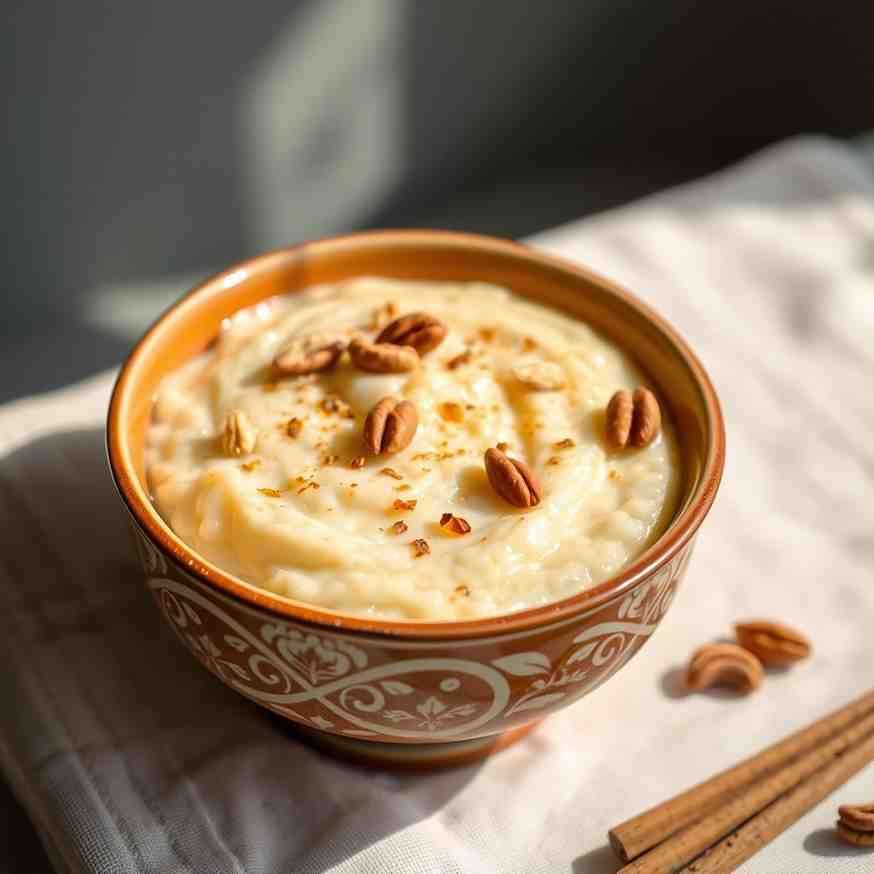
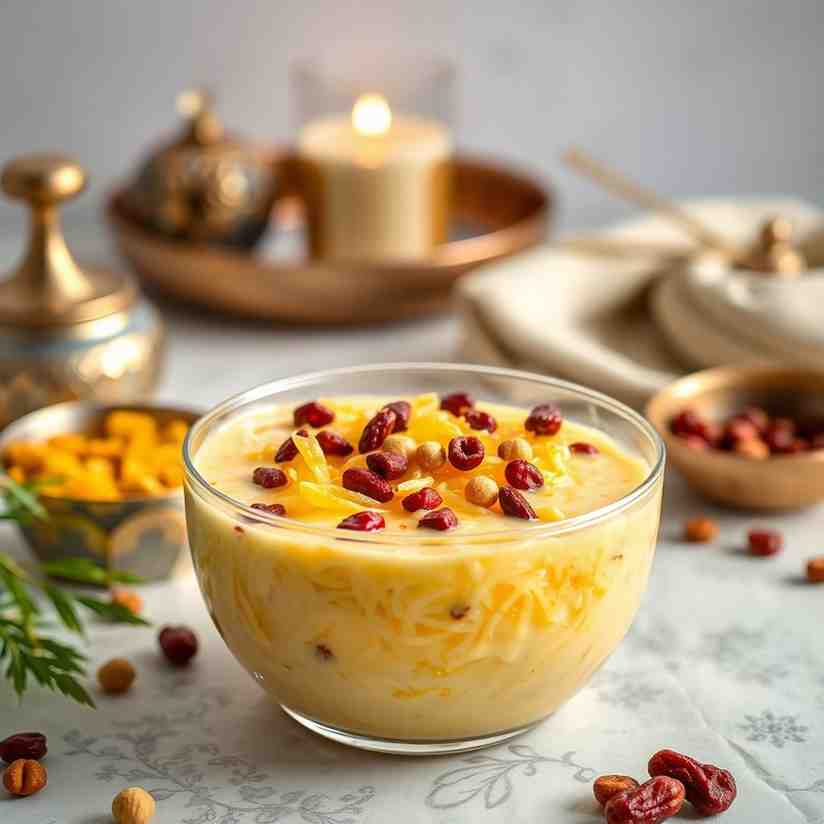
Get ready to discover the magic of Afghan Firnee, a dessert so irresistibly creamy, lightly floral, and cardamom-scented, it’s bound to become your new favorite sweet treat! If you've been searching for the best rice pudding recipe that's both elegant and incredibly simple to make, you've found it. Unlike other rice puddings that can be heavy or complex, our Afghan Firnee is a delicate, custardy delight that comes together easily on your stovetop. It's naturally gluten-free, perfect for special occasions like Eid and Ramadan iftar, or simply as a comforting dessert for family dinners. This recipe uses ground rice for a uniquely silky texture that’s truly spoonable, not thick and lumpy. Forget complicated baking – we're going to show you how to make this traditional Afghan custard with minimal fuss and maximum flavor. Prepare to impress your taste buds and your guests with this easy, beginner-friendly rice pudding recipe with cooked rice (well, ground raw rice, but the concept is similar to a smooth, cooked base!).
Here’s what you’ll need to make rice pudding that’s truly authentic and delicious. The key to that signature creaminess lies in a little ground rice, full-fat milk, and slow, gentle cooking.
Ingredients
Directions
- Prep the Rice & Aromatics: If using whole basmati rice, rinse it thoroughly under cold water, then spread it on a clean kitchen towel to air dry for about 15-20 minutes. Once dry, transfer to a blender or spice grinder and pulse until it forms a fine, slightly sandy flour (not a superfine powder). Set aside. In a small bowl, soak the saffron threads in 2 tablespoons of warm milk (taken from the 4 cups total) and let sit for 5-10 minutes. Measure out your rose water and cardamom.
- Warm the Milk and Di
- ssolve the Sugar: In a heavy-bottomed saucepan, combine the remaining whole milk, granulated sugar, and a pinch of salt. Heat over medium-low heat, stirring occasionally, until the sugar completely dissolves and you see tiny bubbles forming around the edges of the pan. Do not bring to a rolling boil.
- Thicken with Ground Rice: In a separate small bowl, whisk together the ground rice (or rice flour) with 1/4 cup (60ml) of cold milk (taken from the 4 cups total) until you have a smooth, lump-free slurry. Slowly pour this rice slurry into the warm milk in the saucepan, whisking constantly to prevent any lumps from forming. Continue to simmer gently over medium-low heat, stirring frequently with a whisk or heat-safe spatula, making sure to scrape the bottom and sides of the pan. Cook for 15-20 minutes, or until the mixture thickens to the consistency of thin yogurt or heavy cream and coats the back of a spoon.
- Add Cardamom, Saffron and Rose: Remove the saucepan from the heat (or keep on very low heat). Stir in the ground cardamom, the saffron-infused milk, and the rose water. Taste and adjust the rose water or cardamom if you prefer a milder or stronger floral note.
- Chill and Set: Carefully pour the hot firnee into individual small serving bowls or ramekins. Gently tap the bowls on your counter a few times to release any air bubbles. For a smooth top, you can lay plastic wrap directly on the surface of the firnee in each bowl. Alternatively, if you enjoy a thin "skin" on your pudding, you can skip the plastic wrap. Let the firnee cool to room temperature on the counter, then transfer to the refrigerator to chill for at least 2-4 hours, or until it's cold and softly set.
- Garnish & Serve: Just before serving, garnish your chilled Afghan Firnee with chopped pistachios, almonds, and optional dried rose petals or dried fruit. Remember, firnee is always served cold, straight from the fridge, offering a refreshing and creamy experience.
Afghan Firnee The Best Creamy Rice Pudding Recipe
- Serves: 8 People
- Prepare Time: 15 minutes
- Cooking Time: 30 minutes
- Calories: 300
- Difficulty: Easy
Get ready to discover the magic of Afghan Firnee, a dessert so irresistibly creamy, lightly floral, and cardamom-scented, it’s bound to become your new favorite sweet treat! If you've been searching for the best rice pudding recipe that's both elegant and incredibly simple to make, you've found it. Unlike other rice puddings that can be heavy or complex, our Afghan Firnee is a delicate, custardy delight that comes together easily on your stovetop. It's naturally gluten-free, perfect for special occasions like Eid and Ramadan iftar, or simply as a comforting dessert for family dinners. This recipe uses ground rice for a uniquely silky texture that’s truly spoonable, not thick and lumpy. Forget complicated baking – we're going to show you how to make this traditional Afghan custard with minimal fuss and maximum flavor. Prepare to impress your taste buds and your guests with this easy, beginner-friendly rice pudding recipe with cooked rice (well, ground raw rice, but the concept is similar to a smooth, cooked base!).
Here’s what you’ll need to make rice pudding that’s truly authentic and delicious. The key to that signature creaminess lies in a little ground rice, full-fat milk, and slow, gentle cooking.
Ingredients
Directions
- Prep the Rice & Aromatics: If using whole basmati rice, rinse it thoroughly under cold water, then spread it on a clean kitchen towel to air dry for about 15-20 minutes. Once dry, transfer to a blender or spice grinder and pulse until it forms a fine, slightly sandy flour (not a superfine powder). Set aside. In a small bowl, soak the saffron threads in 2 tablespoons of warm milk (taken from the 4 cups total) and let sit for 5-10 minutes. Measure out your rose water and cardamom.
- Warm the Milk and Di
- ssolve the Sugar: In a heavy-bottomed saucepan, combine the remaining whole milk, granulated sugar, and a pinch of salt. Heat over medium-low heat, stirring occasionally, until the sugar completely dissolves and you see tiny bubbles forming around the edges of the pan. Do not bring to a rolling boil.
- Thicken with Ground Rice: In a separate small bowl, whisk together the ground rice (or rice flour) with 1/4 cup (60ml) of cold milk (taken from the 4 cups total) until you have a smooth, lump-free slurry. Slowly pour this rice slurry into the warm milk in the saucepan, whisking constantly to prevent any lumps from forming. Continue to simmer gently over medium-low heat, stirring frequently with a whisk or heat-safe spatula, making sure to scrape the bottom and sides of the pan. Cook for 15-20 minutes, or until the mixture thickens to the consistency of thin yogurt or heavy cream and coats the back of a spoon.
- Add Cardamom, Saffron and Rose: Remove the saucepan from the heat (or keep on very low heat). Stir in the ground cardamom, the saffron-infused milk, and the rose water. Taste and adjust the rose water or cardamom if you prefer a milder or stronger floral note.
- Chill and Set: Carefully pour the hot firnee into individual small serving bowls or ramekins. Gently tap the bowls on your counter a few times to release any air bubbles. For a smooth top, you can lay plastic wrap directly on the surface of the firnee in each bowl. Alternatively, if you enjoy a thin "skin" on your pudding, you can skip the plastic wrap. Let the firnee cool to room temperature on the counter, then transfer to the refrigerator to chill for at least 2-4 hours, or until it's cold and softly set.
- Garnish & Serve: Just before serving, garnish your chilled Afghan Firnee with chopped pistachios, almonds, and optional dried rose petals or dried fruit. Remember, firnee is always served cold, straight from the fridge, offering a refreshing and creamy experience.
The following nutritional values are per serving (one piece of cake) Calories ~250-300 kcal Carbohydrates ~35-40g Protein ~8-10g Fat ~10-12g Time-Saving Tools & Ingredients Here are a few items that can make your Firnee-making journey even smoother, especially if you’re looking to save a little time or ensure the best results. Problem: You're trying to achieve a perfectly smooth, creamy pudding, but the milk keeps sticking and scorching on the bottom of your pot. Problem: You're trying to mix your ground rice into a slurry, or incorporate it into the hot milk, and lumps are forming. Problem: The recipe calls for ground rice, and you don't have a powerful blender or the time to grind your own basmati. Problem: Measuring ingredients by volume (cups) can sometimes be inconsistent, leading to slight variations in your recipe's outcome. Click any ingredient for detailed nutritional information:Recipe Nutritional Values
Additional Information
Recipe Success Tips
Ingredient Substitutions & Variations
Cultural Variations
Make-Ahead & Storage Instructions
Firnee Troubleshooting – Too Thin, Too Thick, or Lumpy?
Frequently Asked Questions
Recommended Kitchen Tools
Heavy-Bottom Saucepan
Agitate: This can ruin the flavor of your entire batch, leading to a burnt taste and wasted ingredients. Nobody wants to scrape burnt milk!
Solution: A heavy-bottom saucepan distributes heat much more evenly, significantly reducing the risk of scorching and allowing you to stir less frantically. It’s a game-changer for creamy desserts.Quality Whisk
Agitate: Lumps mean a less-than-silky texture in your final Firnee, which can be disappointing after all your effort.
Solution: A good whisk ensures your ground rice slurry is perfectly smooth and helps you incorporate it seamlessly into the milk, guaranteeing that signature custardy, lump-free consistency.Pre-Ground Rice Flour
Agitate: Grinding rice adds an extra step and can be messy, especially if you're in a hurry or don't want to buy another kitchen gadget.
Solution: Using good quality, pre-ground rice flour (often labeled "fine rice flour") is a fantastic shortcut. It provides the exact texture you need without any extra effort, getting you to that delicious Firnee faster.Digital Kitchen Scale
Agitate: Even small discrepancies in key ingredients like ground rice or sugar can impact the texture and sweetness of your Firnee, making it too thick, too thin, or not quite right.
Solution: A digital kitchen scale allows for precise measurement by weight (grams), ensuring consistent results every single time you make this recipe. It removes guesswork and helps you replicate perfection.Calories per Ingredient
You may also like

Hey there! I’m just someone who seriously loves good food and believes that cooking doesn’t have to be complicated to be amazing. Whether it’s a quick weeknight dinner or a cozy weekend meal, I’m all about sharing easy, tasty recipes that actually work.