Bolivian Morochillo - Treat Recipe
Bolivian Morochillo - Treat Recipe
- Serves: 6 People
- Prepare Time: 25 minutes
- Cooking Time: 75 minutes
- Calories: -
- Difficulty: Medium
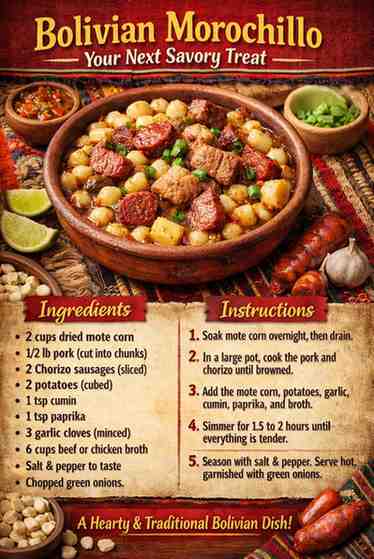
Welcome to a taste of the Andes! If you’re searching for truly authentic ``homemade recipes`` that warm your soul and tantalize your taste buds, look no further than Bolivian Morochillo. This isn't just any dish; it's a beloved staple, a comforting ``meal and recipe`` that embodies the rich culinary heritage of Bolivia. While our site often features delightful ``sweets and treats recipes``, Morochillo offers a unique savory experience, proving that the best ``home made meals`` can be found in unexpected places.
Morochillo is a hearty, flavorful soup, traditionally made with white corn (mote), meat (often beef or chicken), and a vibrant array of vegetables and spices. It’s more than just food; it’s a cultural embrace, a dish often shared during family gatherings or as a nourishing pick-me-up. Its importance in Bolivian cuisine cannot be overstated, cherished for its robust flavors and its ability to bring people together. Whether you're a seasoned chef or just starting your journey with ``recipes for baking sweets`` or savory dishes, this recipe for Morochillo is designed to be simple, clear, and utterly delicious. Get ready to discover a new favorite ``homemade recipe`` that will transport you straight to the heart of the Andes!
Ingredients
Directions
- Prep Your Ingredients: Start by ensuring all your vegetables are chopped and ready. If you're using dried mote, make sure to soak it overnight and cook it until tender before you begin this recipe (usually 2-3 hours of simmering). For convenience, canned or frozen cooked mote works wonderfully.
- Sauté Aromatics: Heat the vegetable oil in a large pot or Dutch oven over medium heat. Add the chopped onion and cook until softened and translucent, about 5-7 minutes. Stir in the minced garlic and diced red bell pepper, cooking for another 3-4 minutes until fragrant.
- Build the Flavor Base: Add the ground cumin, dried oregano, and optional turmeric to the pot. Cook for 1 minute, stirring constantly, to toast the spices and release their aromas. This step is crucial for a deeply flavorful soup!
- Brown the Meat: Add the beef stew meat (or chicken pieces) to the pot. Increase the heat slightly and brown the meat on all sides. This helps seal in the juices and adds richness to the soup. If using beef, aim for a nice sear; if using chicken, just cook until it's no longer pink.
- Simmer the Soup: Pour in the beef or chicken broth. Bring the mixture to a boil, then reduce the heat to low, cover the pot, and let it simmer. If using beef, simmer for at least 45-60 minutes, or until the beef is tender. If using chicken, 20-25 minutes should be enough.
- Add Vegetables: Once the meat is tender, add the cooked white corn (mote), cubed potatoes, and sliced carrots to the pot. Continue to simmer, uncovered, for another 15-20 minutes, or until the potatoes and carrots are tender.
- Finish with Peas & Season: Stir in the frozen peas during the last 5 minutes of cooking. Season the soup generously with salt and freshly ground black pepper to taste. Taste and adjust seasonings as needed – this is where you can make it truly your own!
- Serve Hot: Ladle the hot Morochillo into bowls. Garnish with fresh chopped cilantro and serve with lime wedges on the side for an extra burst of freshness. Enjoy your authentic Bolivian ``homemade meal``!
Bolivian Morochillo - Treat Recipe

- Serves: 6 People
- Prepare Time: 25 minutes
- Cooking Time: 75 minutes
- Calories: -
- Difficulty: Medium
Welcome to a taste of the Andes! If you’re searching for truly authentic ``homemade recipes`` that warm your soul and tantalize your taste buds, look no further than Bolivian Morochillo. This isn't just any dish; it's a beloved staple, a comforting ``meal and recipe`` that embodies the rich culinary heritage of Bolivia. While our site often features delightful ``sweets and treats recipes``, Morochillo offers a unique savory experience, proving that the best ``home made meals`` can be found in unexpected places.
Morochillo is a hearty, flavorful soup, traditionally made with white corn (mote), meat (often beef or chicken), and a vibrant array of vegetables and spices. It’s more than just food; it’s a cultural embrace, a dish often shared during family gatherings or as a nourishing pick-me-up. Its importance in Bolivian cuisine cannot be overstated, cherished for its robust flavors and its ability to bring people together. Whether you're a seasoned chef or just starting your journey with ``recipes for baking sweets`` or savory dishes, this recipe for Morochillo is designed to be simple, clear, and utterly delicious. Get ready to discover a new favorite ``homemade recipe`` that will transport you straight to the heart of the Andes!
Ingredients
Directions
- Prep Your Ingredients: Start by ensuring all your vegetables are chopped and ready. If you're using dried mote, make sure to soak it overnight and cook it until tender before you begin this recipe (usually 2-3 hours of simmering). For convenience, canned or frozen cooked mote works wonderfully.
- Sauté Aromatics: Heat the vegetable oil in a large pot or Dutch oven over medium heat. Add the chopped onion and cook until softened and translucent, about 5-7 minutes. Stir in the minced garlic and diced red bell pepper, cooking for another 3-4 minutes until fragrant.
- Build the Flavor Base: Add the ground cumin, dried oregano, and optional turmeric to the pot. Cook for 1 minute, stirring constantly, to toast the spices and release their aromas. This step is crucial for a deeply flavorful soup!
- Brown the Meat: Add the beef stew meat (or chicken pieces) to the pot. Increase the heat slightly and brown the meat on all sides. This helps seal in the juices and adds richness to the soup. If using beef, aim for a nice sear; if using chicken, just cook until it's no longer pink.
- Simmer the Soup: Pour in the beef or chicken broth. Bring the mixture to a boil, then reduce the heat to low, cover the pot, and let it simmer. If using beef, simmer for at least 45-60 minutes, or until the beef is tender. If using chicken, 20-25 minutes should be enough.
- Add Vegetables: Once the meat is tender, add the cooked white corn (mote), cubed potatoes, and sliced carrots to the pot. Continue to simmer, uncovered, for another 15-20 minutes, or until the potatoes and carrots are tender.
- Finish with Peas & Season: Stir in the frozen peas during the last 5 minutes of cooking. Season the soup generously with salt and freshly ground black pepper to taste. Taste and adjust seasonings as needed – this is where you can make it truly your own!
- Serve Hot: Ladle the hot Morochillo into bowls. Garnish with fresh chopped cilantro and serve with lime wedges on the side for an extra burst of freshness. Enjoy your authentic Bolivian ``homemade meal``!
The following nutritional values are per serving (one piece of cake) Calories 350-400 kcal Carbohydrates 40-45g Protein 25-30g Fat 10-15g Dicing all those veggies like onions, carrots, and garlic for your Morochillo can feel like a never-ending task, especially when you're eager to get cooking. Who wants watery eyes from onions or tired hands from chopping? It can really slow down your cooking flow and make meal prep feel like a chore. Solution: Grab a food processor! It can chop, mince, and dice your aromatics and carrots in mere seconds, saving you tons of time and effort. Alternatively, many grocery stores offer pre-chopped mirepoix mixes (celery, carrots, onion) that are perfect for a quick start. Traditional Morochillo requires slow simmering to get the meat and cracked corn perfectly tender, which can take a good chunk of time out of your day. Waiting for hours for a delicious soup to cook can be tough, especially when hunger strikes or you're juggling other tasks. You might even be tempted to reach for takeout instead! Solution: Look for store-bought aji amarillo paste in the international aisle – it's a fantastic shortcut that doesn't compromise on flavor. For fava beans, canned or frozen fava beans are a lifesaver, cutting down on soaking and cooking time while still adding that essential hearty texture. Click any ingredient for detailed nutritional information:Recipe Nutritional Values
Additional Information
Recipe Success Tips
Ingredient Substitutions & Variations
Cultural Variations
Make-Ahead & Storage Instructions
Frequently Asked Questions
Recommended Kitchen Tools
store-bought aji amarillo paste
Calories per Ingredient
You may also like

Hey there! I’m just someone who seriously loves good food and believes that cooking doesn’t have to be complicated to be amazing. Whether it’s a quick weeknight dinner or a cozy weekend meal, I’m all about sharing easy, tasty recipes that actually work.