Burkina Faso Koudoukou Recipe - Sweet Peanut Bites
Burkina Faso Koudoukou Recipe - Sweet Peanut Bites
- Serves: 20 People
- Prepare Time: 15 minutes
- Cooking Time: 15 minutes
- Calories: -
- Difficulty: Easy
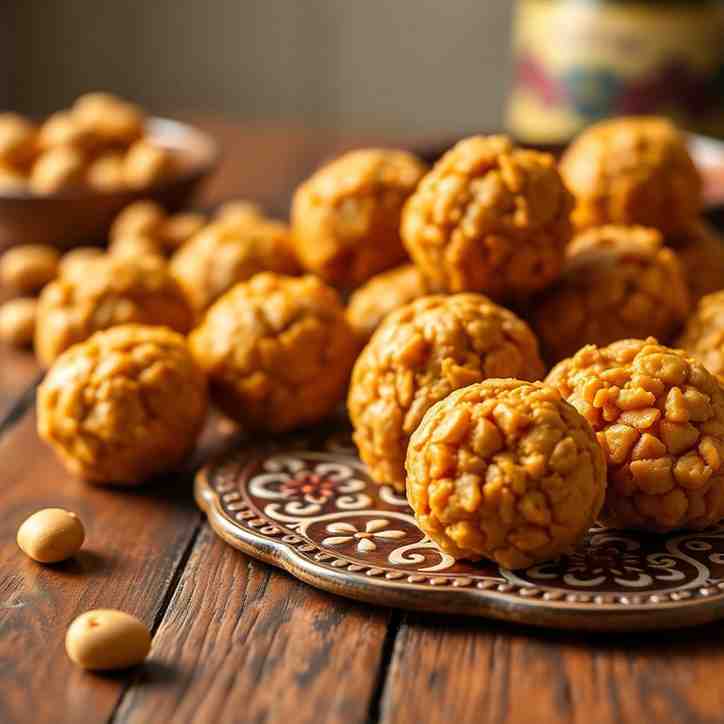
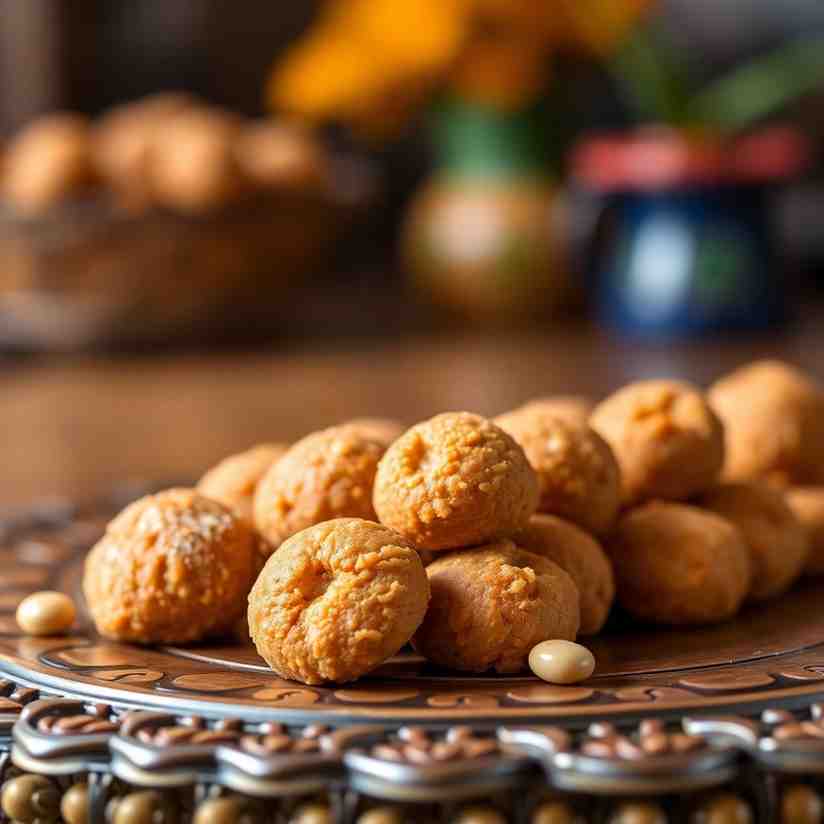
Hey there, fellow food adventurers! Get ready to explore a delicious, lesser-known sweet from the heart of West Africa. This Burkina Faso Koudoukou recipe introduces you to a delightful peanut-and-grain sweet inspired by the vibrant street snacks and bustling market flavors of Koudougou. If you've ever searched for "Koudoukou" and found yourself looking at Persian herb frittatas, you're not alone! Many search results show Persian "koukou" or "kookoo," but this article is here to finally give you a clear, authentic Burkinabé-style recipe for this unique candy-like treat. It's time to savor the true essence of Burkina Faso!
Ingredients
Directions
- Prep the Pan and PeanutsFirst things first, let's get organized!
- Line your baking sheet or shallow pan with parchment paper, leaving a slight overhang on the sides for easy lifting. Lightly oil the parchment paper to prevent sticking.
- If your peanuts are raw, spread them on a baking sheet and toast them in a 350°F (175°C) oven for 8-10 minutes, stirring once, until they're fragrant and lightly browned. Let them cool slightly before proceeding.
- Toast the GrainThis step adds a wonderful nutty depth to your Koudoukou.
- In a dry (no oil!) heavy-bottomed saucepan or skillet, toast the millet flour or cornmeal over medium-low heat. Stir constantly with a wooden spoon.
- You'll know it's ready when it smells wonderfully nutty and just barely starts to darken, usually after 3-5 minutes. Be careful not to burn it! Remove it from the pan immediately once toasted.
- Make the Simple Syrup BaseNow for the magic! This forms the binding agent for your Koudoukou.
- In your heavy-bottomed saucepan, combine the granulated sugar, water, and a pinch of salt.
- Bring the mixture to a gentle simmer over medium heat, stirring just until the sugar completely dissolves. Once it starts simmering, try to avoid stirring too much to prevent crystallization.
- Watch for visual cues: the syrup will go from cloudy to clear, then gradually start to turn a very light golden color. You're looking for it to reach the "soft ball" stage (around 235-240°F / 113-116°C if using a candy thermometer), where a drop of syrup in cold water forms a soft, pliable ball. If you don't have a thermometer, just aim for that light golden hue and a slightly thicker consistency.
- Fold in Peanuts and GrainTime to bring it all together!
- As soon as your syrup reaches the desired consistency and color, quickly stir in the toasted grain (millet flour or cornmeal) and the roasted peanuts.
- Work fast! Mix everything thoroughly so that all the peanuts and grain are evenly coated with the warm, sticky syrup before it starts to thicken too much.
- The mixture should look thick, scoopable, and glossy—not dry and crumbly, and definitely not soupy.
- Press and ShapeAlmost there!
- Immediately transfer the hot Koudoukou mixture to your prepared, parchment-lined pan.
- Using a lightly oiled spatula or your hands (be careful, it's hot!), press the mixture down very firmly and evenly into the pan. Aim for a thickness of about 1–1.5 cm (½ inch). The firmer you press, the better it will hold together.
- Cool, Cut, and ServeThe grand finale!
- Let the Koudoukou cool in the pan at room temperature until it's firm enough to handle but still slightly warm and cuttable (don't let it get rock hard, or it will crack!). This might take 15-20 minutes.
- Once firm, lift the parchment paper to remove the slab from the pan. Place it on a cutting board and cut it into small diamonds or neat rectangles using a sharp knife.
- Serving suggestions:
- Enjoy Koudoukou simply with a cup of hot tea or coffee for a delightful afternoon treat.
- Serve it as a sweet component on a Burkinabé-inspired snack board alongside roasted peanuts, dried mango, or other dried fruits.
- Flavor, Texture & Serving IdeasLet's dive into what makes Koudoukou such a special treat!
- Texture: Unlike brittle, our Koudoukou is soft-chewy—think along the lines of a dense, chewy nougat or a soft peanut butter fudge, but with whole peanuts. It's satisfyingly substantial without being hard on your teeth.
- Sweetness: While definitely a sweet treat, the caramelized sugar and roasted peanuts create a balanced flavor that's less cloyingly sweet than some American candies. The subtle grain flavor grounds it beautifully.
- Serving Ideas:Koudoukou is wonderfully versatile and perfect for any time you crave a little something sweet:
- Afternoon Snack: It's an ideal pick-me-up with its energy-dense goodness.
- With Hot Beverages: Pair it with your favorite coffee, black tea, or even a refreshing glass of bissap (hibiscus drink) for an authentic West African experience.
- Koudoukou in Burkinabé Food Culture (Context Section)Understanding the ingredients and origins helps appreciate this unique sweet even more.Everyday Ingredients in Burkina FasoBurkinabé cuisine is rich with staples that are both nutritious and versatile. Millet, sorghum, and maize (corn) are fundamental grains, often used to make tô, a thick porridge. Peanuts are another cornerstone, providing essential protein and fat, found in stews, sauces, and snacks. Yams also feature prominently, especially in the south. These simple, wholesome ingredients form the backbone of many dishes, including sweets like Koudoukou.
- Markets of KoudougouImagine the bustling central market of Koudougou, where stalls overflow with fresh produce, grains, and spices. You’d find vendors selling heaps of roasted peanuts and freshly ground millet flour, ready for making tô or other traditional preparations.
- Our Burkina Faso Koudoukou recipe is inspired by these vibrant market scenes, where simple, local ingredients are transformed into everyday delights.
- Inspired by, Not a Museum PieceIt’s important to be honest: many Burkinabé desserts and snacks are wonderfully simple, relying on grains, peanuts, and sugar, reflecting the resourcefulness of the local cuisine. While there isn't one widely documented, "canonical" Koudoukou recipe in English food writing, our version is a respectful, Burkinabé-style peanut sweet rooted deeply in those foundational staples. It’s an interpretation that celebrates the flavors and spirit of the region.
- Variations & Substitutions (Brief Notes Only)Want to tweak your Koudoukou? Here are a few quick ideas to play with the flavor and texture, without needing new ingredient lists!
- Make It a Little SpicyFor those who love a subtle kick, simply add a tiny pinch (¼ teaspoon or less) of cayenne pepper or chili powder to your sugar syrup along with the salt. It won't make it hot, but it will leave a warm, intriguing after-heat that beautifully complements the sweetness.
- Crunchier vs Softer
- For a crunchier bite: Press the mixture thinner (closer to ¼ inch / 0.5 cm) and cook the sugar syrup a bit longer and darker (aim for a firmer golden color, closer to the "hard ball" stage around 250-265°F / 121-129°C). This will make it more brittle-like.
- For a chewier, fudge-adjacent texture: Press it thicker (closer to ¾ inch / 2 cm) and stop cooking the syrup when it's just a light golden color (closer to the "soft ball" stage). Adding a small spoon of oil with the syrup can also contribute to a softer texture.
- Grain SwapIf millet flour or fine cornmeal is completely unavailable, you can use finely ground roasted oats. Simply toast rolled oats in a dry pan until fragrant, then grind them into a fine flour using a spice grinder or food processor. Just be aware that this will shift the texture and flavor profile slightly away from traditional Burkinabé grains.
Burkina Faso Koudoukou Recipe - Sweet Peanut Bites

- Serves: 20 People
- Prepare Time: 15 minutes
- Cooking Time: 15 minutes
- Calories: -
- Difficulty: Easy
Hey there, fellow food adventurers! Get ready to explore a delicious, lesser-known sweet from the heart of West Africa. This Burkina Faso Koudoukou recipe introduces you to a delightful peanut-and-grain sweet inspired by the vibrant street snacks and bustling market flavors of Koudougou. If you've ever searched for "Koudoukou" and found yourself looking at Persian herb frittatas, you're not alone! Many search results show Persian "koukou" or "kookoo," but this article is here to finally give you a clear, authentic Burkinabé-style recipe for this unique candy-like treat. It's time to savor the true essence of Burkina Faso!
Ingredients
Directions
- Prep the Pan and PeanutsFirst things first, let's get organized!
- Line your baking sheet or shallow pan with parchment paper, leaving a slight overhang on the sides for easy lifting. Lightly oil the parchment paper to prevent sticking.
- If your peanuts are raw, spread them on a baking sheet and toast them in a 350°F (175°C) oven for 8-10 minutes, stirring once, until they're fragrant and lightly browned. Let them cool slightly before proceeding.
- Toast the GrainThis step adds a wonderful nutty depth to your Koudoukou.
- In a dry (no oil!) heavy-bottomed saucepan or skillet, toast the millet flour or cornmeal over medium-low heat. Stir constantly with a wooden spoon.
- You'll know it's ready when it smells wonderfully nutty and just barely starts to darken, usually after 3-5 minutes. Be careful not to burn it! Remove it from the pan immediately once toasted.
- Make the Simple Syrup BaseNow for the magic! This forms the binding agent for your Koudoukou.
- In your heavy-bottomed saucepan, combine the granulated sugar, water, and a pinch of salt.
- Bring the mixture to a gentle simmer over medium heat, stirring just until the sugar completely dissolves. Once it starts simmering, try to avoid stirring too much to prevent crystallization.
- Watch for visual cues: the syrup will go from cloudy to clear, then gradually start to turn a very light golden color. You're looking for it to reach the "soft ball" stage (around 235-240°F / 113-116°C if using a candy thermometer), where a drop of syrup in cold water forms a soft, pliable ball. If you don't have a thermometer, just aim for that light golden hue and a slightly thicker consistency.
- Fold in Peanuts and GrainTime to bring it all together!
- As soon as your syrup reaches the desired consistency and color, quickly stir in the toasted grain (millet flour or cornmeal) and the roasted peanuts.
- Work fast! Mix everything thoroughly so that all the peanuts and grain are evenly coated with the warm, sticky syrup before it starts to thicken too much.
- The mixture should look thick, scoopable, and glossy—not dry and crumbly, and definitely not soupy.
- Press and ShapeAlmost there!
- Immediately transfer the hot Koudoukou mixture to your prepared, parchment-lined pan.
- Using a lightly oiled spatula or your hands (be careful, it's hot!), press the mixture down very firmly and evenly into the pan. Aim for a thickness of about 1–1.5 cm (½ inch). The firmer you press, the better it will hold together.
- Cool, Cut, and ServeThe grand finale!
- Let the Koudoukou cool in the pan at room temperature until it's firm enough to handle but still slightly warm and cuttable (don't let it get rock hard, or it will crack!). This might take 15-20 minutes.
- Once firm, lift the parchment paper to remove the slab from the pan. Place it on a cutting board and cut it into small diamonds or neat rectangles using a sharp knife.
- Serving suggestions:
- Enjoy Koudoukou simply with a cup of hot tea or coffee for a delightful afternoon treat.
- Serve it as a sweet component on a Burkinabé-inspired snack board alongside roasted peanuts, dried mango, or other dried fruits.
- Flavor, Texture & Serving IdeasLet's dive into what makes Koudoukou such a special treat!
- Texture: Unlike brittle, our Koudoukou is soft-chewy—think along the lines of a dense, chewy nougat or a soft peanut butter fudge, but with whole peanuts. It's satisfyingly substantial without being hard on your teeth.
- Sweetness: While definitely a sweet treat, the caramelized sugar and roasted peanuts create a balanced flavor that's less cloyingly sweet than some American candies. The subtle grain flavor grounds it beautifully.
- Serving Ideas:Koudoukou is wonderfully versatile and perfect for any time you crave a little something sweet:
- Afternoon Snack: It's an ideal pick-me-up with its energy-dense goodness.
- With Hot Beverages: Pair it with your favorite coffee, black tea, or even a refreshing glass of bissap (hibiscus drink) for an authentic West African experience.
- Koudoukou in Burkinabé Food Culture (Context Section)Understanding the ingredients and origins helps appreciate this unique sweet even more.Everyday Ingredients in Burkina FasoBurkinabé cuisine is rich with staples that are both nutritious and versatile. Millet, sorghum, and maize (corn) are fundamental grains, often used to make tô, a thick porridge. Peanuts are another cornerstone, providing essential protein and fat, found in stews, sauces, and snacks. Yams also feature prominently, especially in the south. These simple, wholesome ingredients form the backbone of many dishes, including sweets like Koudoukou.
- Markets of KoudougouImagine the bustling central market of Koudougou, where stalls overflow with fresh produce, grains, and spices. You’d find vendors selling heaps of roasted peanuts and freshly ground millet flour, ready for making tô or other traditional preparations.
- Our Burkina Faso Koudoukou recipe is inspired by these vibrant market scenes, where simple, local ingredients are transformed into everyday delights.
- Inspired by, Not a Museum PieceIt’s important to be honest: many Burkinabé desserts and snacks are wonderfully simple, relying on grains, peanuts, and sugar, reflecting the resourcefulness of the local cuisine. While there isn't one widely documented, "canonical" Koudoukou recipe in English food writing, our version is a respectful, Burkinabé-style peanut sweet rooted deeply in those foundational staples. It’s an interpretation that celebrates the flavors and spirit of the region.
- Variations & Substitutions (Brief Notes Only)Want to tweak your Koudoukou? Here are a few quick ideas to play with the flavor and texture, without needing new ingredient lists!
- Make It a Little SpicyFor those who love a subtle kick, simply add a tiny pinch (¼ teaspoon or less) of cayenne pepper or chili powder to your sugar syrup along with the salt. It won't make it hot, but it will leave a warm, intriguing after-heat that beautifully complements the sweetness.
- Crunchier vs Softer
- For a crunchier bite: Press the mixture thinner (closer to ¼ inch / 0.5 cm) and cook the sugar syrup a bit longer and darker (aim for a firmer golden color, closer to the "hard ball" stage around 250-265°F / 121-129°C). This will make it more brittle-like.
- For a chewier, fudge-adjacent texture: Press it thicker (closer to ¾ inch / 2 cm) and stop cooking the syrup when it's just a light golden color (closer to the "soft ball" stage). Adding a small spoon of oil with the syrup can also contribute to a softer texture.
- Grain SwapIf millet flour or fine cornmeal is completely unavailable, you can use finely ground roasted oats. Simply toast rolled oats in a dry pan until fragrant, then grind them into a fine flour using a spice grinder or food processor. Just be aware that this will shift the texture and flavor profile slightly away from traditional Burkinabé grains.
The following nutritional values are per serving (one piece of cake) Tools and ingredients that can help you cook more easily and consistently. Click any ingredient for detailed nutritional information:Recipe Nutritional Values
Additional Information
Recipe Success Tips
Tips
Frequently Asked Questions
Recommended Kitchen Tools
Calories per Ingredient
You may also like

Hey there! I’m just someone who seriously loves good food and believes that cooking doesn’t have to be complicated to be amazing. Whether it’s a quick weeknight dinner or a cozy weekend meal, I’m all about sharing easy, tasty recipes that actually work.