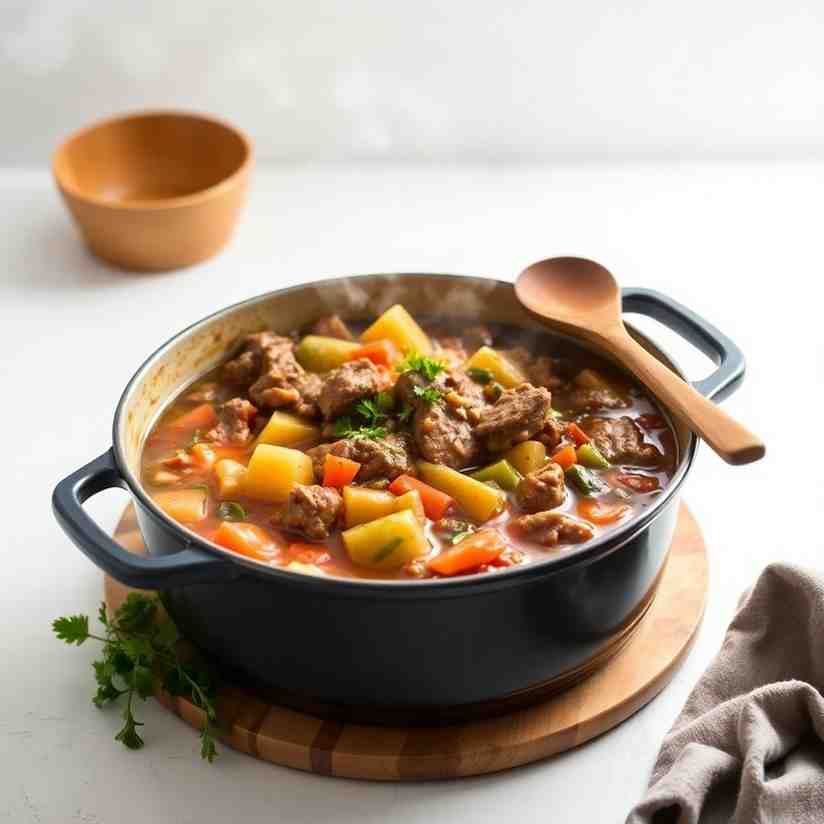
Classic Beef Stew One-Pot Recipe
Classic Beef Stew One-Pot Recipe
- Serves: 6 People
- Prepare Time: 25 minutes
- Cooking Time: 2 hours 15
- Calories: -
- Difficulty: Medium
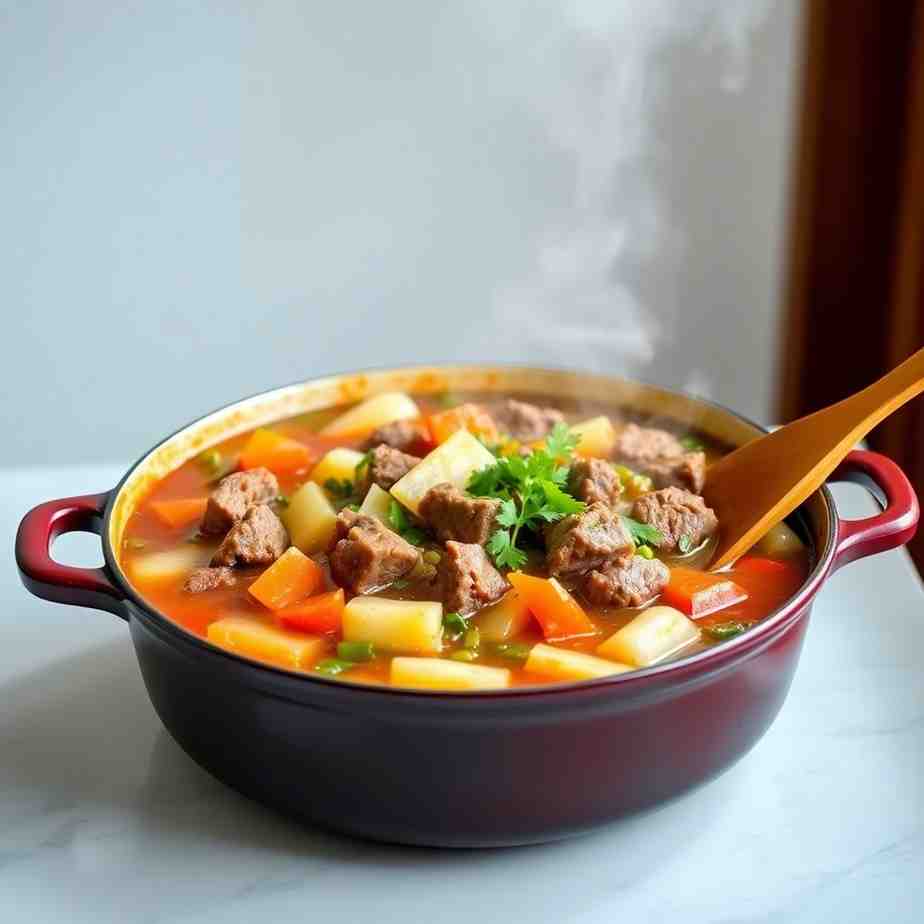
There's nothing quite like a big bowl of classic beef stew to warm you from the inside out. This isn't just any stew recipe beef; it's a hearty, one-pot wonder that brings deep, comforting flavors to your table with surprisingly little fuss. Perfect for a cozy weeknight dinner or a relaxed weekend meal, this easy beef stew recipe is designed to be straightforward, delicious, and even better the next day! Whether you're a seasoned chef or just starting your culinary journey, you'll love how simple it is to create a truly memorable meal. Get ready to discover your new favorite homemade cooking recipe that promises rich flavors and tender beef in every spoonful.
Here’s why you’ll absolutely adore this best stew recipe:
Deep, Rich Flavor: We achieve an incredible depth of flavor by properly browning our beef and building a savory broth boosted with tomato paste and, optionally, dry red wine. It’s a taste that truly satisfies.
Simple One-Pot Method: Forget a pile of dishes! This easy beef stew recipe slow cooker style (but on the stovetop!) comes together in just one Dutch oven or heavy pot, making cleanup a breeze.
Flexible & Pantry-Friendly: With a base of common ingredients and plenty of room for veggie swaps, this recipe is incredibly adaptable to what you have on hand.
Make-Ahead & Freezer-Friendly: This stew tastes even better after a day or two, and it freezes beautifully, making it ideal for meal prep. We’ll show you exactly how to store it safely.
Ingredients
Directions
- Prep the Beef and Vegetables: Start by patting your beef dry with paper towels; this is key for good browning! Trim any excess fat and cut the beef into even 1-inch cubes. Next, chop your onion, celery, and carrots into roughly 1/2-inch pieces, and cube your potatoes into 1-inch pieces. Cutting everything to a similar size ensures even cooking.
- Season and Brown the Beef: In a large bowl, toss the beef cubes with a generous pinch of salt, pepper, and a light coating of flour (or cornstarch, if preferred). Heat a tablespoon of olive oil in a large Dutch oven or heavy-bottomed pot over medium-high heat until shimmering. Sear the beef in batches, making sure not to crowd the pan, until well browned on all sides (about 3-4 minutes per side). You want a rich, dark crust, not just gray meat. Remove the browned beef to a plate and set aside.
- Sauté the Aromatics: Reduce the heat to medium. Add a little more oil to the pot if needed, then add the chopped onion, celery, and carrots. Cook, stirring occasionally, until they begin to soften, about 5-7 minutes. Stir in the minced garlic and tomato paste and cook for another 2-3 minutes, stirring constantly, until the tomato paste darkens slightly. This toasts the paste and deepens its flavor significantly.
- Deglaze and Build the Broth: Pour in the dry red wine (if using) and use a wooden spoon to scrape up any delicious browned bits from the bottom of the pot – that’s pure flavor! Let the wine simmer for a minute or two until it has mostly evaporated. Then, stir in the beef broth, Worcestershire sauce, bay leaves, and your chosen fresh herbs (thyme or rosemary). Return the browned beef and any accumulated juices from the plate back into the pot. Bring the mixture to a gentle boil.
- Simmer Until the Beef is Tender: Once boiling, reduce the heat to low, so the stew is at a very gentle simmer with just lazy little bubbles, not a rolling boil. Partially cover the pot and let it cook for 1.5 to 2 hours, or until the beef is fork-tender. If it’s not tender at the earliest time, just keep simmering gently until it is.
- Add the Potatoes and Finish Cooking: Stir in the cubed potatoes (and any firm vegetables like carrots if you decided to hold them back for firmer texture). Continue to simmer, partially covered, for another 20-30 minutes, or until the potatoes are fully tender. At this point, you can skim off any excess fat from the surface if desired.
- Adjust Thickness: Check the consistency of your stew. It should lightly coat the back of a spoon. If it’s too thin, you can make a small slurry with 1 tablespoon of flour or cornstarch mixed with 2 tablespoons of cold water. Stir this into the simmering stew, a little at a time, until it reaches your desired thickness. Simmer for at least 1-2 minutes after adding the slurry to cook out any raw flour/cornstarch taste. If it’s too thick, simply thin it with a splash of warm beef broth.
- Taste and Finish: Remove the bay leaves and herb sprigs. Taste the stew and adjust the seasoning with more salt and pepper as needed. If the flavor feels a little flat, a small splash of acid like red wine vinegar or balsamic vinegar can brighten it up. For a final flourish, stir in some fresh chopped parsley or chives just before serving for extra color and freshness. Let the stew rest off the heat for 5-10 minutes before serving; this allows the flavors to meld beautifully.
Classic Beef Stew One-Pot Recipe

- Serves: 6 People
- Prepare Time: 25 minutes
- Cooking Time: 2 hours 15
- Calories: -
- Difficulty: Medium
There's nothing quite like a big bowl of classic beef stew to warm you from the inside out. This isn't just any stew recipe beef; it's a hearty, one-pot wonder that brings deep, comforting flavors to your table with surprisingly little fuss. Perfect for a cozy weeknight dinner or a relaxed weekend meal, this easy beef stew recipe is designed to be straightforward, delicious, and even better the next day! Whether you're a seasoned chef or just starting your culinary journey, you'll love how simple it is to create a truly memorable meal. Get ready to discover your new favorite homemade cooking recipe that promises rich flavors and tender beef in every spoonful.
Here’s why you’ll absolutely adore this best stew recipe:
Deep, Rich Flavor: We achieve an incredible depth of flavor by properly browning our beef and building a savory broth boosted with tomato paste and, optionally, dry red wine. It’s a taste that truly satisfies.
Simple One-Pot Method: Forget a pile of dishes! This easy beef stew recipe slow cooker style (but on the stovetop!) comes together in just one Dutch oven or heavy pot, making cleanup a breeze.
Flexible & Pantry-Friendly: With a base of common ingredients and plenty of room for veggie swaps, this recipe is incredibly adaptable to what you have on hand.
Make-Ahead & Freezer-Friendly: This stew tastes even better after a day or two, and it freezes beautifully, making it ideal for meal prep. We’ll show you exactly how to store it safely.
Ingredients
Directions
- Prep the Beef and Vegetables: Start by patting your beef dry with paper towels; this is key for good browning! Trim any excess fat and cut the beef into even 1-inch cubes. Next, chop your onion, celery, and carrots into roughly 1/2-inch pieces, and cube your potatoes into 1-inch pieces. Cutting everything to a similar size ensures even cooking.
- Season and Brown the Beef: In a large bowl, toss the beef cubes with a generous pinch of salt, pepper, and a light coating of flour (or cornstarch, if preferred). Heat a tablespoon of olive oil in a large Dutch oven or heavy-bottomed pot over medium-high heat until shimmering. Sear the beef in batches, making sure not to crowd the pan, until well browned on all sides (about 3-4 minutes per side). You want a rich, dark crust, not just gray meat. Remove the browned beef to a plate and set aside.
- Sauté the Aromatics: Reduce the heat to medium. Add a little more oil to the pot if needed, then add the chopped onion, celery, and carrots. Cook, stirring occasionally, until they begin to soften, about 5-7 minutes. Stir in the minced garlic and tomato paste and cook for another 2-3 minutes, stirring constantly, until the tomato paste darkens slightly. This toasts the paste and deepens its flavor significantly.
- Deglaze and Build the Broth: Pour in the dry red wine (if using) and use a wooden spoon to scrape up any delicious browned bits from the bottom of the pot – that’s pure flavor! Let the wine simmer for a minute or two until it has mostly evaporated. Then, stir in the beef broth, Worcestershire sauce, bay leaves, and your chosen fresh herbs (thyme or rosemary). Return the browned beef and any accumulated juices from the plate back into the pot. Bring the mixture to a gentle boil.
- Simmer Until the Beef is Tender: Once boiling, reduce the heat to low, so the stew is at a very gentle simmer with just lazy little bubbles, not a rolling boil. Partially cover the pot and let it cook for 1.5 to 2 hours, or until the beef is fork-tender. If it’s not tender at the earliest time, just keep simmering gently until it is.
- Add the Potatoes and Finish Cooking: Stir in the cubed potatoes (and any firm vegetables like carrots if you decided to hold them back for firmer texture). Continue to simmer, partially covered, for another 20-30 minutes, or until the potatoes are fully tender. At this point, you can skim off any excess fat from the surface if desired.
- Adjust Thickness: Check the consistency of your stew. It should lightly coat the back of a spoon. If it’s too thin, you can make a small slurry with 1 tablespoon of flour or cornstarch mixed with 2 tablespoons of cold water. Stir this into the simmering stew, a little at a time, until it reaches your desired thickness. Simmer for at least 1-2 minutes after adding the slurry to cook out any raw flour/cornstarch taste. If it’s too thick, simply thin it with a splash of warm beef broth.
- Taste and Finish: Remove the bay leaves and herb sprigs. Taste the stew and adjust the seasoning with more salt and pepper as needed. If the flavor feels a little flat, a small splash of acid like red wine vinegar or balsamic vinegar can brighten it up. For a final flourish, stir in some fresh chopped parsley or chives just before serving for extra color and freshness. Let the stew rest off the heat for 5-10 minutes before serving; this allows the flavors to meld beautifully.
The following nutritional values are per serving (one piece of cake) Calories ~450-550 kcal Carbohydrates ~30-40g Protein ~35-45g Fat ~20-30g Making a delicious beef stew doesn't have to be an all-day affair. While our recipe is designed to be straightforward, a few smart tools and ingredient choices can shave off even more time, getting you to that cozy bowl of comfort faster. Problem: Chopping a large beef chuck roast into even cubes can be time-consuming and a bit of a workout. Problem: Dicing onions, carrots, and celery for the aromatic base takes effort and multiple chopping steps. Problem: Opening a can of tomato paste often means using only a small amount and then wasting the rest because it spoils quickly. Click any ingredient for detailed nutritional information:Recipe Nutritional Values
Additional Information
Recipe Success Tips
Pro Tips for the Best Beef Stew Every Time
Ingredient Substitutions & Variations
Cultural Variations
Make-Ahead & Storage Instructions
Frequently Asked Questions
Recommended Kitchen Tools
Kitchen Tool
Agitate: You're already busy, and wrestling with a large cut of meat just adds another hurdle to getting dinner on the table, especially after a long day.
Solution: Opt for pre-cut "stew meat" from your butcher or grocery store. It's usually beef chuck, already trimmed and cubed, ready to go straight into your pot, saving you precious prep time and effort.Kitchen Tool
Agitate: All that precise knife work can feel like a chore when you're eager to get dinner cooking, especially if you're not a seasoned chef.
Solution: Grab a container of pre-chopped mirepoix (the classic mix of onion, carrots, and celery) from the produce section. It's a fantastic shortcut to building that flavorful foundation without the knife work.Kitchen Tool
Agitate: Nobody likes tossing out perfectly good ingredients, and dealing with leftover canned paste can be a sticky, messy ordeal.
Solution: Keep a tube of tomato paste in your fridge. You can squeeze out exactly what you need, cap it, and save the rest for next time, reducing waste and fuss. It's a game-changer for recipes that call for just a tablespoon or two.Calories per Ingredient
You may also like



Hey there! I’m just someone who seriously loves good food and believes that cooking doesn’t have to be complicated to be amazing. Whether it’s a quick weeknight dinner or a cozy weekend meal, I’m all about sharing easy, tasty recipes that actually work.