
Shkembe Chorba - Gut-Friendly Soup
Shkembe Chorba - Gut-Friendly Soup
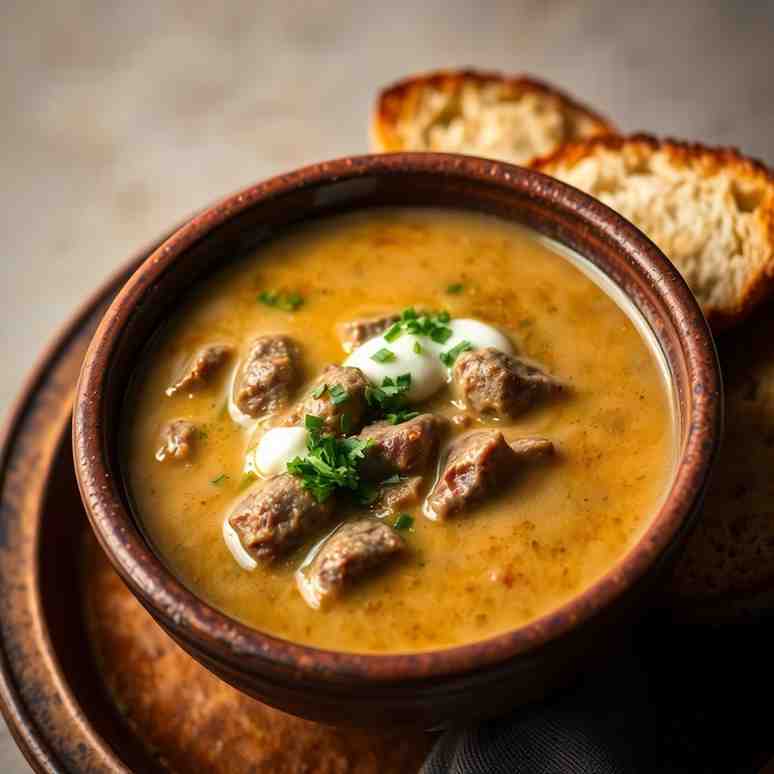

- Serves: 6 People
- Prepare Time: 30 minutes
- Cooking Time: 3 hours
- Calories: -
- Difficulty: Medium
Craving a soup comfort food that's both hearty and steeped in tradition? Look no further than Bulgarian Shkembe Chorba (Tripe Soup)! This classic Balkan dish is renowned for its rich, creamy paprika broth, tender tripe, and a zesty garlic-vinegar kick. It's not just a delicious meal; it's a beloved "morning-after" soup, famous for its comforting and restorative qualities. While it involves a bit of a long simmer, the steps are surprisingly simple, making the reward well worth the effort. Get ready to dive into an authentic Bulgarian culinary experience, enjoy a truly comforting & hearty soup perfect for chilly days, and discover a naturally collagen-rich and nutrient-dense meal that's a true home-cooking classic from the Balkans.
Ingredients
Directions
- Simmer the Tripe Until Tender Combine the cleaned tripe, a whole onion, a carrot, a few garlic cloves, and black peppercorns in a large pot. Cover everything generously with water. Bring the pot to a boil, then reduce the heat to a gentle simmer. Skim off any foam that rises to the surface. Let it simmer for 2 to 3 hours, or until the tripe is wonderfully tender but still has a pleasant, slightly chewy texture. Add more water as needed to keep the tripe submerged during cooking. You'll know it's done when the tripe bends easily and can be bitten through without resistance.
- Strain & Slice Carefully remove the cooked tripe from the pot and let it cool down enough so you can handle it comfortably. Once cooled, slice the tripe into thin, bite-sized strips. Next, strain the cooking liquid into a separate bowl or container, discarding the cooked vegetables and peppercorns. You'll use a measured amount of this flavorful broth for your soup base.
- Make the Paprika Butter In a clean pot, melt butter over low heat. Once melted, stir in the sweet or smoked paprika. Be quick here, as paprika can burn fast! Immediately after stirring in the paprika, whisk in the measured tripe broth and whole milk. Continue whisking gently as you bring the mixture to a very gentle simmer. Avoid a rolling boil, as this can cause the milk to curdle.
- Finish the Soup Add the sliced, tender tripe back into the pot with your creamy paprika broth. Season generously with salt and freshly ground black pepper to taste. Allow the soup to simmer for another 10 to 15 minutes, stirring often. This step allows the flavors to meld beautifully and the broth to thicken slightly.
- Make the Garlic–Vinegar Topping While the soup simmers, prepare your signature topping. Finely mince or press your fresh garlic cloves. In a small bowl, mix the minced garlic with apple cider or red wine vinegar. Let this mixture sit for at least 10 to 15 minutes. This crucial step mellows the raw garlic flavor, ensuring it enhances, rather than overwhelms, the soup.
- Serve Ladle the piping hot Shkembe Chorba into bowls immediately. It's important to serve it hot so the wonderful gelatin in the broth doesn't set. Present the garlic-vinegar mixture and chili flakes or hot pepper powder on the side, allowing everyone to customize their bowl to their preferred level of tang and heat. This soup is traditionally enjoyed with crusty bread. While Bulgarians often pair it with rakia (a traditional fruit brandy) or a cold beer, it’s equally delicious with non-alcoholic options like mineral water or an ayran-style yogurt drink.
- (Optional note: If you prefer a pressure cooker, cook the tripe under high pressure for about 60–90 minutes before proceeding with Step 2.)
Shkembe Chorba - Gut-Friendly Soup

- Serves: 6 People
- Prepare Time: 30 minutes
- Cooking Time: 3 hours
- Calories: -
- Difficulty: Medium
Craving a soup comfort food that's both hearty and steeped in tradition? Look no further than Bulgarian Shkembe Chorba (Tripe Soup)! This classic Balkan dish is renowned for its rich, creamy paprika broth, tender tripe, and a zesty garlic-vinegar kick. It's not just a delicious meal; it's a beloved "morning-after" soup, famous for its comforting and restorative qualities. While it involves a bit of a long simmer, the steps are surprisingly simple, making the reward well worth the effort. Get ready to dive into an authentic Bulgarian culinary experience, enjoy a truly comforting & hearty soup perfect for chilly days, and discover a naturally collagen-rich and nutrient-dense meal that's a true home-cooking classic from the Balkans.
Ingredients
Directions
- Simmer the Tripe Until Tender Combine the cleaned tripe, a whole onion, a carrot, a few garlic cloves, and black peppercorns in a large pot. Cover everything generously with water. Bring the pot to a boil, then reduce the heat to a gentle simmer. Skim off any foam that rises to the surface. Let it simmer for 2 to 3 hours, or until the tripe is wonderfully tender but still has a pleasant, slightly chewy texture. Add more water as needed to keep the tripe submerged during cooking. You'll know it's done when the tripe bends easily and can be bitten through without resistance.
- Strain & Slice Carefully remove the cooked tripe from the pot and let it cool down enough so you can handle it comfortably. Once cooled, slice the tripe into thin, bite-sized strips. Next, strain the cooking liquid into a separate bowl or container, discarding the cooked vegetables and peppercorns. You'll use a measured amount of this flavorful broth for your soup base.
- Make the Paprika Butter In a clean pot, melt butter over low heat. Once melted, stir in the sweet or smoked paprika. Be quick here, as paprika can burn fast! Immediately after stirring in the paprika, whisk in the measured tripe broth and whole milk. Continue whisking gently as you bring the mixture to a very gentle simmer. Avoid a rolling boil, as this can cause the milk to curdle.
- Finish the Soup Add the sliced, tender tripe back into the pot with your creamy paprika broth. Season generously with salt and freshly ground black pepper to taste. Allow the soup to simmer for another 10 to 15 minutes, stirring often. This step allows the flavors to meld beautifully and the broth to thicken slightly.
- Make the Garlic–Vinegar Topping While the soup simmers, prepare your signature topping. Finely mince or press your fresh garlic cloves. In a small bowl, mix the minced garlic with apple cider or red wine vinegar. Let this mixture sit for at least 10 to 15 minutes. This crucial step mellows the raw garlic flavor, ensuring it enhances, rather than overwhelms, the soup.
- Serve Ladle the piping hot Shkembe Chorba into bowls immediately. It's important to serve it hot so the wonderful gelatin in the broth doesn't set. Present the garlic-vinegar mixture and chili flakes or hot pepper powder on the side, allowing everyone to customize their bowl to their preferred level of tang and heat. This soup is traditionally enjoyed with crusty bread. While Bulgarians often pair it with rakia (a traditional fruit brandy) or a cold beer, it’s equally delicious with non-alcoholic options like mineral water or an ayran-style yogurt drink.
- (Optional note: If you prefer a pressure cooker, cook the tripe under high pressure for about 60–90 minutes before proceeding with Step 2.)
The following nutritional values are per serving (one piece of cake) Calories 300-400 kcal Protein 25-35g Fat 20-30g Carbohydrates 5-10g Tools and ingredients that can help you cook more easily and consistently. Problem: Cleaning and simmering tripe can be a long, multi-step process. Problem: Sourcing and preparing tripe can feel intimidating for newcomers. Click any ingredient for detailed nutritional information:Recipe Nutritional Values
Additional Information
Recipe Success Tips
Ingredient Substitutions & Variations
Cultural Variations
Make-Ahead & Storage Instructions
Frequently Asked Questions
Recommended Kitchen Tools
Time-Saving Tools & Ingredients
Agitate: Raw tripe needs careful cleaning and can take hours to become tender, making this a less-than-quick weeknight meal.
Solution: A pressure cooker is your best friend here! It drastically cuts down the tripe cooking time from 2-3 hours to a mere 60-90 minutes under high pressure. This means you can get that tender tripe ready in a fraction of the time, allowing you to enjoy your comforting soup sooner.Time-Saving Tools & Ingredients
Agitate: Finding fresh, cleaned tripe might be a challenge in some areas, and the thought of extensive cleaning can deter even adventurous cooks.
Solution: Look for pre-boiled or pre-cleaned tripe at your local Asian, Latin, or specialty grocery stores. While raw tripe offers the freshest flavor, pre-boiled versions are a fantastic shortcut. Just give them a good rinse and a quick trim, and you're ready to skip straight to the slicing and simmering in your broth, saving significant prep time.Calories per Ingredient
You may also like
.jpg)


Hey there! I’m just someone who seriously loves good food and believes that cooking doesn’t have to be complicated to be amazing. Whether it’s a quick weeknight dinner or a cozy weekend meal, I’m all about sharing easy, tasty recipes that actually work.