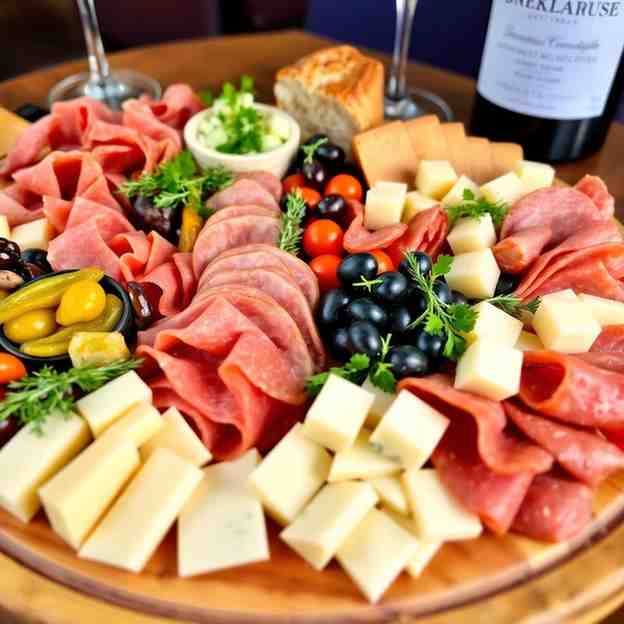
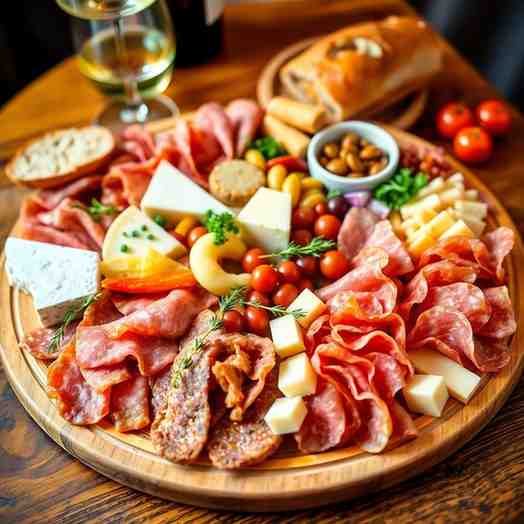
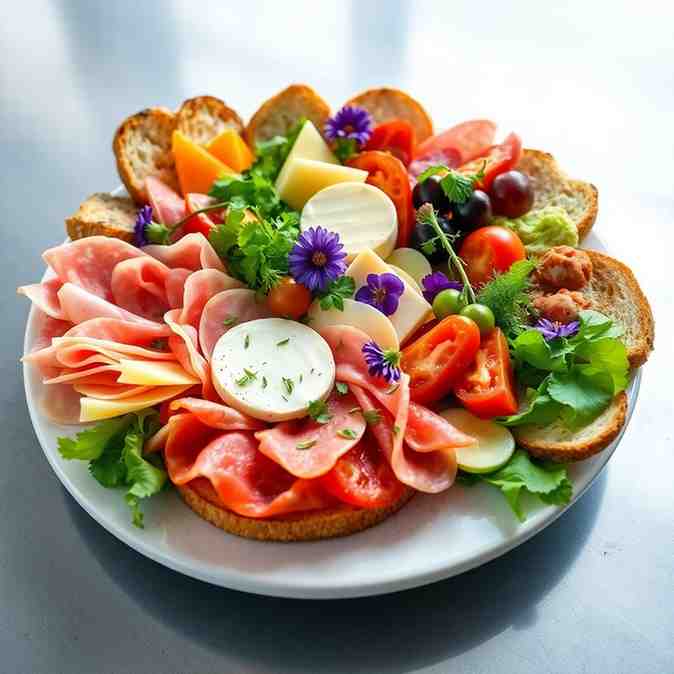
Ever heard of a Brettljause? If you love charcuterie boards, you're in for a treat! Imagine a rustic, delicious Austrian meat and cheese board piled high with savory cold cuts, creamy spreads, tangy pickles, and hearty bread. It's more than just a snack; it's a celebration of simple, wholesome alpine flavors, perfect for sharing with friends and family.
This guide will show you exactly how to bring the charm of an Austrian Buschenschank (a traditional wine tavern) right into your home. We'll dive into what makes a traditional Austrian charcuterie board special, break down all the essential Brettljause ingredients, and give you a super easy, step-by-step Brettljause recipe to build your own stunning platter. Whether you're a seasoned host or just starting your culinary adventures, get ready to master the art of the Brettljause and impress everyone with this delightful alpine snack board idea. Let's get started!
Ingredients
Directions
Prep Meats, Cheese, and Spreads
Thinly slice all your chosen meats and cheeses. If you bought pre-sliced, simply arrange them.
If making spreads from scratch, prepare them now. Otherwise, transfer store-bought spreads into small ramekins or bowls.
Prep Vegetables and Condiments
Wash and slice all vegetables: radishes (halve or quarter if large), cucumbers, bell peppers, and cherry tomatoes.
Grate fresh horseradish if using, or spoon prepared horseradish into a small bowl.
Spoon mustard into another small bowl.
Set Up the Board
Choose a large wooden board (the "Brettl"!) or a big platter.
Start by placing your small ramekins or bowls for the spreads, pickles, horseradish, and mustard onto the board. This anchors your design.
Arrange Meats and Cheeses
Fan out the sliced meats, layering them slightly to create volume.
Shingle the sliced cheeses, creating appealing stacks or lines. Aim to balance colors and textures across the board, making sure it looks invitingly full.
Add Vegetables, Bread, and Final Touches
Tuck the prepared vegetables and pickles into the gaps between the meats, cheeses, and bowls.
Arrange the sliced bread either directly on the board, folded or fanned out, or place it in a separate basket alongside the board.
If using, sprinkle some fresh herbs (like chives or parsley) over the board for a pop of color.
Serve
Serve your Brettljause at room temperature for the best flavor.
Keep any backup portions of meats and cheeses chilled until ready to replenish the board.
Brettljause Make an Austrian Meat & Cheese Board at Home
Serves: 4 People
Prepare Time: 20 minutes
Cooking Time: 0 minutes (
Calories: -
Difficulty:
Easy
Ever heard of a Brettljause? If you love charcuterie boards, you're in for a treat! Imagine a rustic, delicious Austrian meat and cheese board piled high with savory cold cuts, creamy spreads, tangy pickles, and hearty bread. It's more than just a snack; it's a celebration of simple, wholesome alpine flavors, perfect for sharing with friends and family.
This guide will show you exactly how to bring the charm of an Austrian Buschenschank (a traditional wine tavern) right into your home. We'll dive into what makes a traditional Austrian charcuterie board special, break down all the essential Brettljause ingredients, and give you a super easy, step-by-step Brettljause recipe to build your own stunning platter. Whether you're a seasoned host or just starting your culinary adventures, get ready to master the art of the Brettljause and impress everyone with this delightful alpine snack board idea. Let's get started!
Ingredients
Directions
Prep Meats, Cheese, and Spreads
Thinly slice all your chosen meats and cheeses. If you bought pre-sliced, simply arrange them.
If making spreads from scratch, prepare them now. Otherwise, transfer store-bought spreads into small ramekins or bowls.
Prep Vegetables and Condiments
Wash and slice all vegetables: radishes (halve or quarter if large), cucumbers, bell peppers, and cherry tomatoes.
Grate fresh horseradish if using, or spoon prepared horseradish into a small bowl.
Spoon mustard into another small bowl.
Set Up the Board
Choose a large wooden board (the "Brettl"!) or a big platter.
Start by placing your small ramekins or bowls for the spreads, pickles, horseradish, and mustard onto the board. This anchors your design.
Arrange Meats and Cheeses
Fan out the sliced meats, layering them slightly to create volume.
Shingle the sliced cheeses, creating appealing stacks or lines. Aim to balance colors and textures across the board, making sure it looks invitingly full.
Add Vegetables, Bread, and Final Touches
Tuck the prepared vegetables and pickles into the gaps between the meats, cheeses, and bowls.
Arrange the sliced bread either directly on the board, folded or fanned out, or place it in a separate basket alongside the board.
If using, sprinkle some fresh herbs (like chives or parsley) over the board for a pop of color.
Serve
Serve your Brettljause at room temperature for the best flavor.
Keep any backup portions of meats and cheeses chilled until ready to replenish the board.
Recipe Nutritional Values
The following nutritional values are per serving (one piece of cake)
Calories
~450-600 kcal
Carbohydrates
~20-30g
Protein
~25-35g
Fat
~30-45g
Additional Information
serving (assuming 6 servings from the recipe as a substantial appetizer): Calories: ~450-600 kcal Carbohydrates: ~20-30g Protein: ~25-35g Fat: ~30-45g #### Additional Information Rich in Protein: Provides a significant amount of protein from the diverse selection of meats and cheeses.
Rich in Protein: Provides a significant amount of protein from the diverse selection of meats and cheeses.
Good Source of Fiber: The inclusion of fresh vegetables and whole-grain bread contributes to dietary fiber.
Variability: These values are estimates. Actual nutrition will depend on the specific types and quantities of meats, cheeses, spreads, and bread used. Choosing leaner meats and more vegetables can reduce calorie and fat content.
Recipe Success Tips
Ingredient Substitutions & Variations
Can't find Speck? Use good quality prosciutto, Black Forest ham, or a smoked deli ham.
No Bergkäse? Gruyère, Emmental, or even a sharp cheddar make excellent alpine-style cheese substitutes.
Liptauer alternative? Mix cream cheese with paprika, caraway seeds, and a touch of mustard for a quick homemade version, or use a store-bought flavored cream cheese.
Pork-Free: Easily swap cured pork products for smoked turkey breast, chicken sausage, or additional cheeses and vegetarian spreads.
Vegetarian Brettljause: Focus on a wider array of cheeses, add hard-boiled eggs, various homemade spreads (like an herb cream cheese or a white bean dip), nuts, olives, and extra fresh and pickled vegetables.
Gluten-Free: Serve with gluten-free crackers or bread. Always double-check labels on sausages and spreads to ensure they are certified gluten-free.
Lighter Board: Increase the proportion of fresh vegetables and pickles, opt for leaner deli meats, and choose lighter cheese options. Add fresh fruit slices like apples or grapes for a refreshing counterpoint.
Cultural Variations
While the core concept of a "Jause" (snack) board remains, regional differences in Austria influence the specific ingredients:
Styrian Brettljause: Often features pumpkin seed oil (Kürbiskernöl) on the side, specific cured meats like "Steirischer Vulcano Schinken," and local cheeses.
Tyrolean Brettljause: Known for its hearty mountain cheeses (like Graukäse) and smoked sausages (Kaminwurzen, Landjäger), reflecting the rugged alpine environment.
Buschenschank Boards: These boards served in traditional wine taverns might lean more heavily on local wines and include house-made spreads or specific regional cold cuts.
Board Presentation: Traditionally, the board should look abundant and rustic, not overly sparse or "styled" like some modern charcuterie boards. The emphasis is on wholesome ingredients simply presented.
Make-Ahead & Storage Instructions
What you can prep ahead (1 day):
Prepare any homemade spreads (like Liptauer). Store them in airtight containers in the fridge.
Roast pork can be cooked and sliced a day in advance.
Most vegetables (cucumbers, peppers, radishes) can be washed and sliced, then stored in sealed containers in the fridge. Radishes and cucumber slices can be kept in a bit of water to stay crisp.
How long can Brettljause sit out?
For food safety, try not to leave the board at room temperature for more than 2 hours. After this, perishable items like meats and cheeses can start to spoil.
If you're serving outdoors or in a warm environment, reduce this time to 1 hour. It's always best to keep backup portions chilled and replenish the board as needed.
Storing Leftovers:
Carefully transfer any remaining meats and cheeses into separate airtight containers or wrap them tightly in plastic wrap. Store in the refrigerator for 3-4 days.
Leftover vegetables and pickles can be stored in separate containers in the fridge for 2-3 days.
Discard any bread that has been sitting out for too long or any spreads that show signs of spoilage.
Reusing Leftovers:
Sandwiches: Perfect for hearty sandwiches the next day.
Breakfast Board: A smaller version for a savory breakfast.
Snack Boxes: Pack individual portions for work or school lunches.
Salads: Dice leftover meats and cheeses to toss into a fresh green salad.
Frequently Asked Questions
Brettljause is traditionally served cold! It's a platter of cold cuts, cheeses, spreads, and fresh vegetables, designed to be enjoyed at room temperature or slightly chilled.
While very similar, Brettljause is a specific type of charcuterie board with a distinct Austrian identity. It typically features Austrian cured meats (like Speck), alpine cheeses (like Bergkäse), Liptauer cheese spread, horseradish, and rustic rye bread. Charcuterie boards can be much broader in their ingredient choices, drawing from various culinary traditions.
Traditionally, Brettljause isn't "prepared" in the cooking sense. It's assembled! Meats and cheeses are sliced, vegetables are washed and cut, spreads are made or portioned, and everything is artfully arranged on a wooden board (a "Brettl") for serving. The key is quality ingredients and thoughtful presentation.
Common vegetables include fresh radishes, sliced cucumbers, bell peppers, cherry tomatoes, and pickled gherkins or cornichons. Grated fresh horseradish is also a staple for that signature kick!
Absolutely! While traditional Brettljause often features pork products like Speck or roast pork, you can easily swap them for other cured meats like turkey or chicken sausage, beef jerky, or even lean smoked fish. The spirit of the board is about enjoying a variety of flavors and textures.
As a light meal, plan for about 3-4 ounces of meat and 2-3 ounces of cheese per person, plus ample bread, spreads, and vegetables. If it's an appetizer for a larger gathering, you can scale back slightly, but it's always better to have a little extra!
Yes, you can! For a picnic, pack ingredients separately in airtight containers and assemble at your destination. For a work lunch, create a mini "Brettljause" in a bento box or divided container, keeping moist ingredients separate until serving. Just be mindful of food safety and keep everything chilled until ready to eat.
A Closer Look at Our Ingredients
Speck (Cured Ham)
Estimated Nutrition (per 1 oz serving): Calories: 90-110, Carbs: 0g, Protein: 7-9g, Fat: 7-9g (varies by cut and cure).
Key Health Benefits: Good source of protein for muscle repair and satiety. Provides essential B vitamins.
Key Health Benefits: Excellent source of calcium for bone health, high in protein, and contains healthy fats. Often naturally lactose-free due to aging process.
Making an amazing Brettljause doesn't have to take all day! Here are some smart shortcuts to help you get that beautiful board on the table faster.
Smart Slicing Solutions
Problem: Slicing all those meats, cheeses, and veggies by hand can be a real time-sink, and getting uniform slices can be tough. Agitate: Who wants to spend an hour prepping when you could be enjoying the company (and the food!)? Uneven slices can also make your board look less polished. Solution: Invest in a good mandoline slicer for consistent veggie slices (like cucumbers and radishes) or a sharp electric deli slicer if you frequently buy whole cuts of meat and cheese. Alternatively, opt for pre-sliced deli meats and cheeses from your local grocery store. Many stores offer quality options that are already perfectly thin.
Ready-Made Spreads
Problem: Making spreads like Liptauer from scratch adds an extra step to your prep, which might not always fit into your schedule. Agitate: While homemade Liptauer is fantastic, sometimes you just need to get the board ready without extra cooking or mixing. Solution: Don't hesitate to use store-bought flavored cream cheese (like chive or garlic & herb) as a quick Liptauer-style substitute. Many specialty stores also carry pre-made pâtés or even authentic Liptauer spread, saving you valuable time.
Pre-Washed & Pre-Cut Veggies
Problem: Washing and chopping all the fresh vegetables can add up to significant prep time. Agitate: Every minute counts when you're trying to put together a spread, and sometimes just washing produce feels like a chore. Solution: Look for pre-washed radishes, mini cucumbers, or baby carrots in the produce section. While it's always great to use fresh, these convenient options can shave off precious minutes, letting you focus on the fun part: arranging your board!
Calories per Ingredient
Click any ingredient for detailed nutritional information:
Nutritional Benefits:
Good source of protein for muscle repair and satietyProvides essential B vitamins
Nutritional Benefits:
Excellent source of calcium for bone health, high in protein, and contains healthy fatsOften naturally lactose-free due to aging process
Nutritional Benefits:
Very low in calories, high in Vitamin C (for immunity), and a good source of fiberContains antioxidants and can aid digestion
Nutritional Benefits:
Good source of dietary fiber, which supports digestive health and satietyProvides complex carbohydrates for sustained energy
Nutritional Benefits:
Provides protein and calcium from the cheese baseCan be a source of probiotics if made with fermented dairy
Hey there! I’m just someone who seriously loves good food and believes that cooking doesn’t have to be complicated to be amazing. Whether it’s a quick weeknight dinner or a cozy weekend meal, I’m all about sharing easy, tasty recipes that actually work.