Crisp, Yeast-Free Middle Eastern Flatbread (Kesra)
Crisp, Yeast-Free Middle Eastern Flatbread (Kesra)


- Serves: 4 People
- Prepare Time: 15 minutes
- Cooking Time: 30 minutes
- Calories: -
- Difficulty: Easy
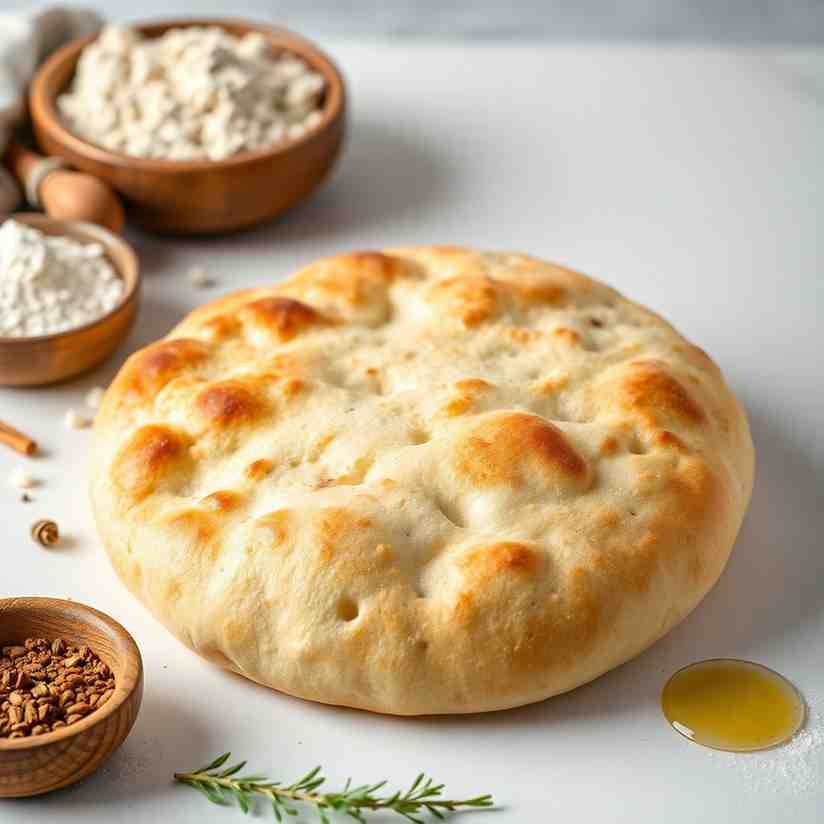
Ready to ditch the yeast and bake up some serious flavor? Meet Kesra, a traditional Algerian semolina flatbread that's about to become your new favorite middle eastern flatbread. This isn't just any bread; it's a crisp, tender, and incredibly satisfying yeast free bread that cooks right on your stovetop griddle. Forget the oven for this one – we're going old-school for that authentic texture and taste.
Whether you're looking for easy African meals, a quick breakfast side, or the perfect vehicle for dipping in olive oil for bread, Kesra delivers. It's fantastic with savory stews like chorba or harira, alongside a fresh salad, or simply enjoyed with a drizzle of your best extra virgin olive oil. We've meticulously tested this African food recipe to bring you a foolproof, dual-unit (grams and cups!) method that's perfect for both beginner and experienced bakers. Get ready to enjoy a taste of North Africa, made simple and delicious in your own kitchen!
Kesra is a traditional Algerian flatbread, beloved for its distinctive crisp exterior and wonderfully tender, slightly chewy inside. It's primarily made with semolina, giving it a unique texture and subtle nutty flavor that sets it apart from other breads. Cooked on a stovetop griddle or tajine, it’s a staple in Algerian households and surprisingly simple to master.
You might hear Kesra called by other names, depending on the region. Some common aliases include khobz f’tir or aɣrum n’tajin. Just don't confuse it with its cousins like matlou (which is yeasted and puffs up) or harcha (a buttery Moroccan semolina bread often made with baking powder). Our version focuses on the classic, unleavened, griddle-cooked style for pure, unadulterated Kesra goodness.
We're sticking to the traditional, yeast-free method for Kesra, and for good reason! This approach offers a faster workflow, letting you enjoy fresh bread much quicker without waiting for dough to rise. More importantly, it delivers a cleaner, more authentic flavor and that signature crisp-tender texture that's characteristic of true Kesra.
While you might spot modern variants online that use yeast or call for oven finishing, we're skipping those. The traditional stovetop method is key to achieving the perfect Kesra, ensuring a firm, evenly cooked flatbread with a beautiful golden crust. This recipe embraces simplicity and tradition, providing you with a delicious, genuinely yeast free bread experience.
Ingredients
Directions
- Prep Your Workspace & Equipment: Gather all your ingredients. Have a 10-12 inch cast-iron skillet or steel griddle/tajine ready. You'll also need a fork, a rolling pin, and a ruler (for checking thickness and diameter).
- Rub-In the Semolina: In a large mixing bowl, combine the fine semolina, medium semolina, and salt. Add the olive oil. Using your fingertips, rub the oil into the semolina until the mixture resembles wet sand. This step is crucial for coating the semolina grains and ensuring a tender crumb.
- Hydrate the Dough: Gradually add the warm water, starting with ¾ cup (180 ml). Mix with your hands, bringing the dough together until it forms a soft, pliable ball. It should feel smooth and slightly sticky, but not wet. If it's too crumbly, add the remaining water a teaspoon at a time. The final dough ball should weigh approximately 600-650 grams.
- Rest the Dough: Cover the bowl with a clean kitchen towel and let the dough rest for 15 to 30 minutes at room temperature. This rest period is vital! It allows the semolina to fully absorb the water, preventing a gritty texture and ensuring a tender, easy-to-work-with dough.
- Shape the Discs: After resting, lightly knead the dough for a minute or two on a clean, lightly floured surface (use fine semolina or all-purpose flour if needed, but go easy). Divide the dough into four equal portions. Take one portion and, using your rolling pin, roll it out into a disc that is about 8-10 mm (roughly ⅜ inch) thick and 7-8 inches in diameter. Repeat with the remaining dough portions.
- Prick for Perfection: Using a fork, prick a pattern all over the surface of each dough disc. This prevents the flatbread from puffing up excessively during cooking and promotes even cooking and crispness.
- Cook on the Griddle: Preheat your cast-iron skillet or griddle over medium-low heat for 5-7 minutes. You want it hot enough to cook, but not so hot that it scorches. Place one Kesra disc onto the preheated dry skillet.
- Rotate and Flip: Cook the first side for 5-8 minutes, rotating the disc every 45-60 seconds to ensure even browning. Keep an eye on it – you're looking for deep golden patches and a firm, crisp underside. Once golden, flip the Kesra and cook the second side for another 5-8 minutes, rotating regularly.
- Check for Doneness: The Kesra is done when both sides are a beautiful deep golden, feel firm to the touch, and there are no raw or doughy spots inside.
- Finish & Rest: Once cooked, you can brush a tiny drop of olive oil on the hot Kesra for extra flavor and shine. Transfer the cooked flatbread to a wire rack and immediately cover it with a clean kitchen towel. Let it rest for at least 5 minutes. This steaming step helps the bread to soften slightly, resulting in a tender crumb while still maintaining that lovely crisp crust. Repeat with the remaining dough discs.
- Serve Warm: Break or cut the Kesra into wedges and serve warm!
Crisp, Yeast-Free Middle Eastern Flatbread (Kesra)

- Serves: 4 People
- Prepare Time: 15 minutes
- Cooking Time: 30 minutes
- Calories: -
- Difficulty: Easy
Ready to ditch the yeast and bake up some serious flavor? Meet Kesra, a traditional Algerian semolina flatbread that's about to become your new favorite middle eastern flatbread. This isn't just any bread; it's a crisp, tender, and incredibly satisfying yeast free bread that cooks right on your stovetop griddle. Forget the oven for this one – we're going old-school for that authentic texture and taste.
Whether you're looking for easy African meals, a quick breakfast side, or the perfect vehicle for dipping in olive oil for bread, Kesra delivers. It's fantastic with savory stews like chorba or harira, alongside a fresh salad, or simply enjoyed with a drizzle of your best extra virgin olive oil. We've meticulously tested this African food recipe to bring you a foolproof, dual-unit (grams and cups!) method that's perfect for both beginner and experienced bakers. Get ready to enjoy a taste of North Africa, made simple and delicious in your own kitchen!
Kesra is a traditional Algerian flatbread, beloved for its distinctive crisp exterior and wonderfully tender, slightly chewy inside. It's primarily made with semolina, giving it a unique texture and subtle nutty flavor that sets it apart from other breads. Cooked on a stovetop griddle or tajine, it’s a staple in Algerian households and surprisingly simple to master.
You might hear Kesra called by other names, depending on the region. Some common aliases include khobz f’tir or aɣrum n’tajin. Just don't confuse it with its cousins like matlou (which is yeasted and puffs up) or harcha (a buttery Moroccan semolina bread often made with baking powder). Our version focuses on the classic, unleavened, griddle-cooked style for pure, unadulterated Kesra goodness.
We're sticking to the traditional, yeast-free method for Kesra, and for good reason! This approach offers a faster workflow, letting you enjoy fresh bread much quicker without waiting for dough to rise. More importantly, it delivers a cleaner, more authentic flavor and that signature crisp-tender texture that's characteristic of true Kesra.
While you might spot modern variants online that use yeast or call for oven finishing, we're skipping those. The traditional stovetop method is key to achieving the perfect Kesra, ensuring a firm, evenly cooked flatbread with a beautiful golden crust. This recipe embraces simplicity and tradition, providing you with a delicious, genuinely yeast free bread experience.
Ingredients
Directions
- Prep Your Workspace & Equipment: Gather all your ingredients. Have a 10-12 inch cast-iron skillet or steel griddle/tajine ready. You'll also need a fork, a rolling pin, and a ruler (for checking thickness and diameter).
- Rub-In the Semolina: In a large mixing bowl, combine the fine semolina, medium semolina, and salt. Add the olive oil. Using your fingertips, rub the oil into the semolina until the mixture resembles wet sand. This step is crucial for coating the semolina grains and ensuring a tender crumb.
- Hydrate the Dough: Gradually add the warm water, starting with ¾ cup (180 ml). Mix with your hands, bringing the dough together until it forms a soft, pliable ball. It should feel smooth and slightly sticky, but not wet. If it's too crumbly, add the remaining water a teaspoon at a time. The final dough ball should weigh approximately 600-650 grams.
- Rest the Dough: Cover the bowl with a clean kitchen towel and let the dough rest for 15 to 30 minutes at room temperature. This rest period is vital! It allows the semolina to fully absorb the water, preventing a gritty texture and ensuring a tender, easy-to-work-with dough.
- Shape the Discs: After resting, lightly knead the dough for a minute or two on a clean, lightly floured surface (use fine semolina or all-purpose flour if needed, but go easy). Divide the dough into four equal portions. Take one portion and, using your rolling pin, roll it out into a disc that is about 8-10 mm (roughly ⅜ inch) thick and 7-8 inches in diameter. Repeat with the remaining dough portions.
- Prick for Perfection: Using a fork, prick a pattern all over the surface of each dough disc. This prevents the flatbread from puffing up excessively during cooking and promotes even cooking and crispness.
- Cook on the Griddle: Preheat your cast-iron skillet or griddle over medium-low heat for 5-7 minutes. You want it hot enough to cook, but not so hot that it scorches. Place one Kesra disc onto the preheated dry skillet.
- Rotate and Flip: Cook the first side for 5-8 minutes, rotating the disc every 45-60 seconds to ensure even browning. Keep an eye on it – you're looking for deep golden patches and a firm, crisp underside. Once golden, flip the Kesra and cook the second side for another 5-8 minutes, rotating regularly.
- Check for Doneness: The Kesra is done when both sides are a beautiful deep golden, feel firm to the touch, and there are no raw or doughy spots inside.
- Finish & Rest: Once cooked, you can brush a tiny drop of olive oil on the hot Kesra for extra flavor and shine. Transfer the cooked flatbread to a wire rack and immediately cover it with a clean kitchen towel. Let it rest for at least 5 minutes. This steaming step helps the bread to soften slightly, resulting in a tender crumb while still maintaining that lovely crisp crust. Repeat with the remaining dough discs.
- Serve Warm: Break or cut the Kesra into wedges and serve warm!
You may also like

Hey there! I’m just someone who seriously loves good food and believes that cooking doesn’t have to be complicated to be amazing. Whether it’s a quick weeknight dinner or a cozy weekend meal, I’m all about sharing easy, tasty recipes that actually work.