Bulgarian Tarama - Lemon Olive Oil Dip
Bulgarian Tarama - Lemon Olive Oil Dip
- Serves: 6 People
- Prepare Time: 20 minutes
- Cooking Time: 0 minutes
- Calories: -
- Difficulty: Easy
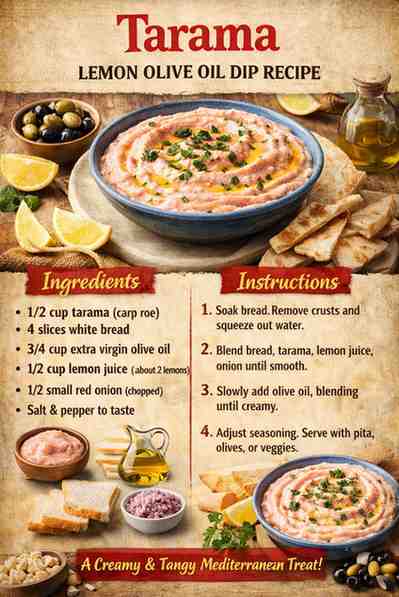
Welcome to a culinary journey that takes you straight to the sun-drenched shores of the Black Sea! If you've ever dreamt of savoring the rich, vibrant flavors of Eastern Mediterranean cuisine, you're in for a treat. Today, we're diving into the delightful world of Bulgarian Tarama Delight – a luxuriously creamy, subtly salty, and beautifully pink fish-roe dip that’s an absolute staple along the Bulgarian and Romanian coasts. Forget everything you thought you knew about fish roe; this isn't your average dip. This recipe is inspired by the authentic seaside spreads served with fresh bread and chilled drinks, offering a taste of tradition right in your kitchen.
Smooth, Luxurious Texture: Say goodbye to grainy, oily dips! Our method ensures a velvety, spreadable consistency that melts in your mouth.
Balanced & Bright Flavor: It’s perfectly salty, tangy, and surprisingly not overpoweringly fishy, thanks to a careful balance of ingredients.
Supermarket-Friendly Ingredients: We’ll guide you through easily accessible ingredients and offer clear substitutions, so you can make this no matter where you shop.
Naturally Soft Pink Color: Achieve that characteristic soft pink hue without any neon food dyes, relying on naturally tinted roe or a subtle helper.
At its heart, tarama refers to salted, cured fish roe, typically from cod, carp, or mullet. When you blend this roe with ingredients like bread or potato, olive oil, and lemon juice, you create taramasalata – the creamy spread we all know and love. While often associated with Greek cuisine, fish roe spreads are incredibly common and cherished along the entire Eastern Mediterranean and Black Sea coastlines.
Our Bulgarian Tarama Delight recipe pays homage to the versions you'd find in quaint seaside towns in Bulgaria and Romania. Here, these spreads, sometimes called haiver, often feature a bread base rather than potato, creating a lighter, airier texture. To capture this authentic regional essence, our recipe uses stale white bread as its foundation. We also strike a perfect balance by combining rich extra-virgin olive oil with a light, neutral oil. This ensures you get that beautiful fruity aroma without the dip becoming too heavy or bitter, a clever trick often employed in the best Greek tarama recipes to achieve a delicate flavor. You might have encountered similar dips on a vibrant Greek meze platter, a Turkish meze spread, or while dining in charming coastal restaurants in Bulgaria or Romania.
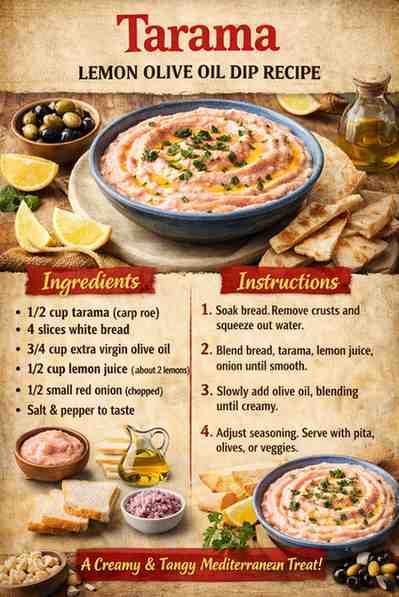
Ingredients
Directions
- Prep the Bread Base Begin by preparing your bread. Place the stale white bread slices (crusts removed) in a bowl and cover them with cold water. Let them soak for about 5 minutes until fully softened. Once soft, firmly squeeze out all excess water. You want the bread to be just damp, not dripping, and it should hold its shape when squeezed. This ensures your dip won't be watery.
- Build the Flavor Paste Transfer your prepared, squeezed bread to the bowl of a food processor. Add the fish roe and the finely grated onion or shallot. Pulse these ingredients together until they form a coarse, uniform paste. Make sure to scrape down the sides of the bowl with a spatula to ensure everything is well combined and no large pieces of roe or onion remain.
- Emulsify with Oils and Lemon With the food processor running on low speed, slowly begin to drizzle in the olive oil and neutral oil, alternating with the fresh lemon juice. This is similar to making mayonnaise: slow, steady addition is key to creating a thick, glossy emulsion rather than a separated, oily dip. Continue to drizzle, adding small splashes of cold water (1 tablespoon at a time) if the mixture becomes too thick or seems to struggle with emulsifying. The mixture should transform into a thick, pale pink, and spreadable dip, leaving soft peaks when the processor stops.
- Adjust Texture & Color Stop the processor and taste the tarama. The roe is already salty, so add additional salt very cautiously, if at all. Add a pinch of white pepper if desired. If the dip is too thick for your liking, add another tablespoon of cold water or lemon juice at a time, blending briefly after each addition, until you reach your desired consistency. If your tarama is too pale and you prefer a more pronounced pink hue, gently whisk in a few drops of beet juice or paprika oil off the blender. Avoid overprocessing at this stage, as it can affect the texture.
- Chill and Rest Carefully transfer your Bulgarian Tarama Delight to an airtight container. Cover it tightly and refrigerate for at least 1–2 hours. This chilling period is crucial; it allows the flavors to mellow, deepen, and meld together beautifully. You’ll also notice that the texture will firm up slightly in the fridge, becoming even more luxurious.
- Serve Before serving, give the chilled tarama a gentle stir. Transfer it to a beautiful chilled serving bowl, swirling the top with the back of a spoon for an appealing presentation. For a final touch, drizzle a little extra extra-virgin olive oil over the top. Garnish with a few kalamata olives, a sprinkle of fresh chopped dill, or parsley if you want to create that authentic Bulgarian-meets-Mediterranean look. Enjoy!
Bulgarian Tarama - Lemon Olive Oil Dip
- Serves: 6 People
- Prepare Time: 20 minutes
- Cooking Time: 0 minutes
- Calories: -
- Difficulty: Easy
Welcome to a culinary journey that takes you straight to the sun-drenched shores of the Black Sea! If you've ever dreamt of savoring the rich, vibrant flavors of Eastern Mediterranean cuisine, you're in for a treat. Today, we're diving into the delightful world of Bulgarian Tarama Delight – a luxuriously creamy, subtly salty, and beautifully pink fish-roe dip that’s an absolute staple along the Bulgarian and Romanian coasts. Forget everything you thought you knew about fish roe; this isn't your average dip. This recipe is inspired by the authentic seaside spreads served with fresh bread and chilled drinks, offering a taste of tradition right in your kitchen.
Smooth, Luxurious Texture: Say goodbye to grainy, oily dips! Our method ensures a velvety, spreadable consistency that melts in your mouth.
Balanced & Bright Flavor: It’s perfectly salty, tangy, and surprisingly not overpoweringly fishy, thanks to a careful balance of ingredients.
Supermarket-Friendly Ingredients: We’ll guide you through easily accessible ingredients and offer clear substitutions, so you can make this no matter where you shop.
Naturally Soft Pink Color: Achieve that characteristic soft pink hue without any neon food dyes, relying on naturally tinted roe or a subtle helper.
At its heart, tarama refers to salted, cured fish roe, typically from cod, carp, or mullet. When you blend this roe with ingredients like bread or potato, olive oil, and lemon juice, you create taramasalata – the creamy spread we all know and love. While often associated with Greek cuisine, fish roe spreads are incredibly common and cherished along the entire Eastern Mediterranean and Black Sea coastlines.
Our Bulgarian Tarama Delight recipe pays homage to the versions you'd find in quaint seaside towns in Bulgaria and Romania. Here, these spreads, sometimes called haiver, often feature a bread base rather than potato, creating a lighter, airier texture. To capture this authentic regional essence, our recipe uses stale white bread as its foundation. We also strike a perfect balance by combining rich extra-virgin olive oil with a light, neutral oil. This ensures you get that beautiful fruity aroma without the dip becoming too heavy or bitter, a clever trick often employed in the best Greek tarama recipes to achieve a delicate flavor. You might have encountered similar dips on a vibrant Greek meze platter, a Turkish meze spread, or while dining in charming coastal restaurants in Bulgaria or Romania.
Ingredients
Directions
- Prep the Bread Base Begin by preparing your bread. Place the stale white bread slices (crusts removed) in a bowl and cover them with cold water. Let them soak for about 5 minutes until fully softened. Once soft, firmly squeeze out all excess water. You want the bread to be just damp, not dripping, and it should hold its shape when squeezed. This ensures your dip won't be watery.
- Build the Flavor Paste Transfer your prepared, squeezed bread to the bowl of a food processor. Add the fish roe and the finely grated onion or shallot. Pulse these ingredients together until they form a coarse, uniform paste. Make sure to scrape down the sides of the bowl with a spatula to ensure everything is well combined and no large pieces of roe or onion remain.
- Emulsify with Oils and Lemon With the food processor running on low speed, slowly begin to drizzle in the olive oil and neutral oil, alternating with the fresh lemon juice. This is similar to making mayonnaise: slow, steady addition is key to creating a thick, glossy emulsion rather than a separated, oily dip. Continue to drizzle, adding small splashes of cold water (1 tablespoon at a time) if the mixture becomes too thick or seems to struggle with emulsifying. The mixture should transform into a thick, pale pink, and spreadable dip, leaving soft peaks when the processor stops.
- Adjust Texture & Color Stop the processor and taste the tarama. The roe is already salty, so add additional salt very cautiously, if at all. Add a pinch of white pepper if desired. If the dip is too thick for your liking, add another tablespoon of cold water or lemon juice at a time, blending briefly after each addition, until you reach your desired consistency. If your tarama is too pale and you prefer a more pronounced pink hue, gently whisk in a few drops of beet juice or paprika oil off the blender. Avoid overprocessing at this stage, as it can affect the texture.
- Chill and Rest Carefully transfer your Bulgarian Tarama Delight to an airtight container. Cover it tightly and refrigerate for at least 1–2 hours. This chilling period is crucial; it allows the flavors to mellow, deepen, and meld together beautifully. You’ll also notice that the texture will firm up slightly in the fridge, becoming even more luxurious.
- Serve Before serving, give the chilled tarama a gentle stir. Transfer it to a beautiful chilled serving bowl, swirling the top with the back of a spoon for an appealing presentation. For a final touch, drizzle a little extra extra-virgin olive oil over the top. Garnish with a few kalamata olives, a sprinkle of fresh chopped dill, or parsley if you want to create that authentic Bulgarian-meets-Mediterranean look. Enjoy!
The following nutritional values are per serving (one piece of cake) Calories ~250-300 kcal Carbohydrates ~5-8g Protein ~8-12g Fat ~20-25g (primarily from healthy mono- and polyunsaturated fats from olive oil) Making delicious Bulgarian Tarama Delight doesn't have to be a marathon! Here are a few smart tools and ingredient choices that can speed things up and make your cooking experience a breeze. Problem: Whipping up a silky-smooth tarama by hand can be an absolute arm workout, often leaving you with a chunky, inconsistent dip. Problem: Sourcing fresh, high-quality fish roe can be tricky in many places, and prepping it from scratch (if you could find it) is a messy, time-consuming affair. Problem: While squeezing fresh lemons is always ideal for that bright, zesty kick, it can be tedious if you need a lot, and sometimes you just don't have fresh ones on hand. Click any ingredient for detailed nutritional information:Recipe Nutritional Values
Additional Information
Recipe Success Tips
Pro Tips, Variations & Storage
Ingredient Substitutions & Variations
Cultural Variations
Make-Ahead & Storage Instructions
Frequently Asked Questions
Recommended Kitchen Tools
Food Processor or High-Powered Blender
Agitate: Who wants a grainy tarama when you're aiming for that luscious, velvety mouthfeel? Plus, trying to achieve that perfect emulsion manually takes ages and can be frustrating.
Solution: A good food processor or high-powered blender is your best friend here. It makes quick work of blending and emulsifying all the ingredients, ensuring a perfectly smooth and creamy tarama every single time, with minimal effort on your part.Quality Jarred Fish Roe (Tarama)
Agitate: Don't let the hunt for specialized ingredients stop you from enjoying this amazing dip! Dealing with raw, cured roe can feel intimidating for beginner cooks.
Solution: Opt for a high-quality jarred cod roe or tarama from a specialty European market or a reliable online retailer. It's already cured and ready to blend, saving you a ton of time and effort while still delivering that authentic, rich flavor.Fresh or Quality Bottled Lemon Juice
Agitate: Don't let a lack of fresh lemons prevent you from making this delightful dip! The tangy acidity of lemon olive oil is crucial, and you don't want to skip it.
Solution: Always keep a bottle of high-quality, 100% pure lemon juice in your fridge for those moments when fresh isn't an option. It's a fantastic backup to ensure your tarama still gets that essential tangy lift and bright flavor.Calories per Ingredient
You may also like

Hey there! I’m just someone who seriously loves good food and believes that cooking doesn’t have to be complicated to be amazing. Whether it’s a quick weeknight dinner or a cozy weekend meal, I’m all about sharing easy, tasty recipes that actually work.