Sweet Austrian Apricot Dumplings (Marillenknödel) Recipe
Sweet Austrian Apricot Dumplings (Marillenknödel) Recipe
- Serves: 6 People
- Prepare Time: 30 minutes
- Cooking Time: 20 minutes
- Calories: -
- Difficulty: Easy
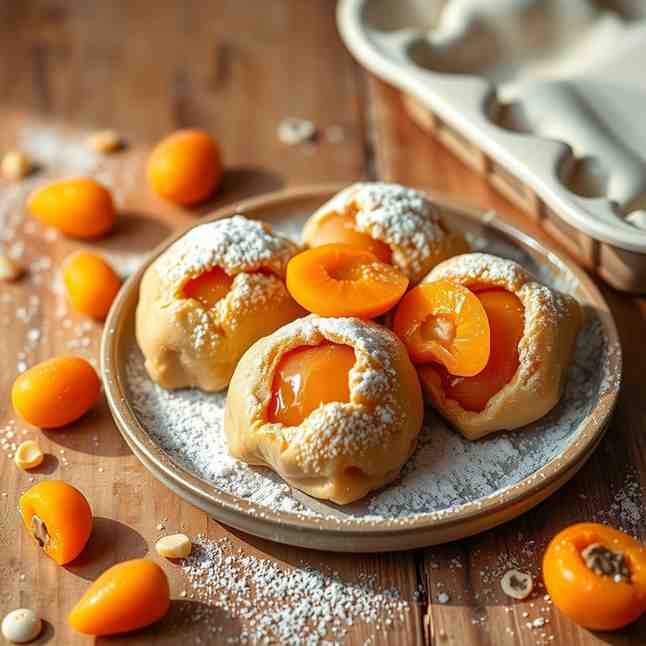
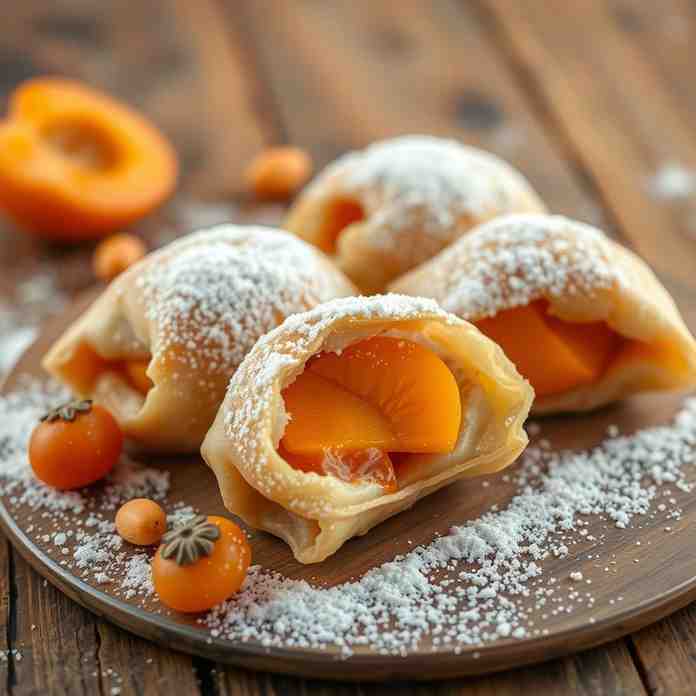
Welcome to the delightful world of Austrian Apricot Dumplings, or as they're lovingly known in their homeland, ``Marillenknödel``! Imagine soft, pillowy dumplings made from a creamy, tender dough, wrapped around a whole, ripe apricot, then gently boiled and rolled in fragrant, buttery breadcrumbs. This isn't just a dessert; it's a hug on a plate, a taste of ``traditional Austrian comfort food`` that works equally well as a light sweet dinner or a special treat.
We've meticulously crafted this ``apricot dumplings recipe`` to bring the authentic flavors of Austria right to your kitchen. You'll love this recipe because:
It features a single, well-tested dough formula that's tender and easy to handle.
All ingredients and measurements are US-friendly (both cups and grams!).
We provide clear, ``step-by-step instructions`` and ``cooking tips`` to ensure your success.
The taste? Exactly like the traditional version you'd get in Austria, especially from the apricot-rich Wachau Valley.
This comprehensive guide will help you master this ``dessert food`` with confidence, whether you're a beginner or an experienced baker.
Ingredients
Directions
- Make the Cheese Dough In a mixing bowl, cream together the softened unsalted butter, granulated sugar, vanilla extract, and a pinch of salt until the mixture is smooth and fluffy. Next, beat in the large egg and your soft white cheese (Topfen/quark or the Greek yogurt + cream cheese mix) until well combined. Finally, gently fold in the all-purpose flour until a soft, slightly sticky dough forms. It should hold together but still feel quite moist. Shape the dough into a flat disk, wrap it tightly in plastic, and chill it in the refrigerator for a minimum of 30-60 minutes. This chilling time is crucial as it firms up the dough, making it much easier to handle and less sticky, which leads to better structure in your finished dumplings.
- Prep the Apricots Carefully wash and thoroughly dry all your small to medium ripe apricots. Using a small, sharp knife, cut along the natural seam of each apricot just enough to gently remove the pit, trying to keep the two halves attached. Into the cavity where the pit once was, tuck a sugar cube or a small spoonful (1-2 teaspoons) of granulated sugar or apricot jam. Gently press the apricot halves back together to enclose the sugar.
- Shape the Dumplings Retrieve your chilled dough from the refrigerator. Divide the dough into equal portions, corresponding to the number and size of your prepared apricots. Lightly flour your hands and your work surface to prevent sticking. Take one portion of dough and flatten it into a thick, even disk (about 3-4 inches in diameter). Place a prepared apricot in the very center of the dough disk. Carefully wrap the dough around the apricot, ensuring it's completely enclosed. Pinch the seams together firmly to seal. Gently roll the dumpling between your hands to form a smooth, round ball with no visible seams. Place the shaped dumpling on a lightly floured plate or tray. Repeat with the remaining dough and apricots, keeping the shaped dumplings chilled while you work on the rest.
- Boil the Dumplings Bring a large pot of lightly salted water to a rolling boil. Once boiling, reduce the heat to a steady, gentle simmer – you want small bubbles, not a vigorous boil, to prevent the dumplings from breaking apart. Carefully add the shaped dumplings to the simmering water in batches, ensuring they have enough room to float freely without overcrowding the pot. After a minute or two, gently nudge the dumplings off the bottom of the pot with a slotted spoon to prevent them from sticking. Cook the dumplings until they float to the surface and then continue cooking for an additional 8-10 minutes (depending on size) to ensure the apricot inside is tender and the dough is fully cooked. Lift the cooked dumplings out of the water with a slotted spoon and drain them briefly.
- Make the Buttery Breadcrumb Coating While your dumplings are cooking, melt the unsalted butter in a large skillet over medium-low heat. Add the fine, unseasoned breadcrumbs to the melted butter. Toast the breadcrumbs, stirring constantly, until they turn a beautiful golden brown and become wonderfully fragrant. This usually takes about 5-7 minutes. Remove the skillet from the heat, then stir in the sugar (brown or white) and the optional pinch of ground cinnamon. Adding the sugar off the heat prevents it from caramelizing too hard.
- Coat and Serve As soon as the dumplings are cooked and drained, gently roll them in the warm, buttery breadcrumb coating until they are evenly coated on all sides. Transfer the coated ``Marillenknödel`` to individual plates, adding any extra breadcrumbs on top for good measure. Finish with a generous dusting of powdered sugar. Serve immediately and enjoy your homemade taste of Austria!
Sweet Austrian Apricot Dumplings (Marillenknödel) Recipe
- Serves: 6 People
- Prepare Time: 30 minutes
- Cooking Time: 20 minutes
- Calories: -
- Difficulty: Easy
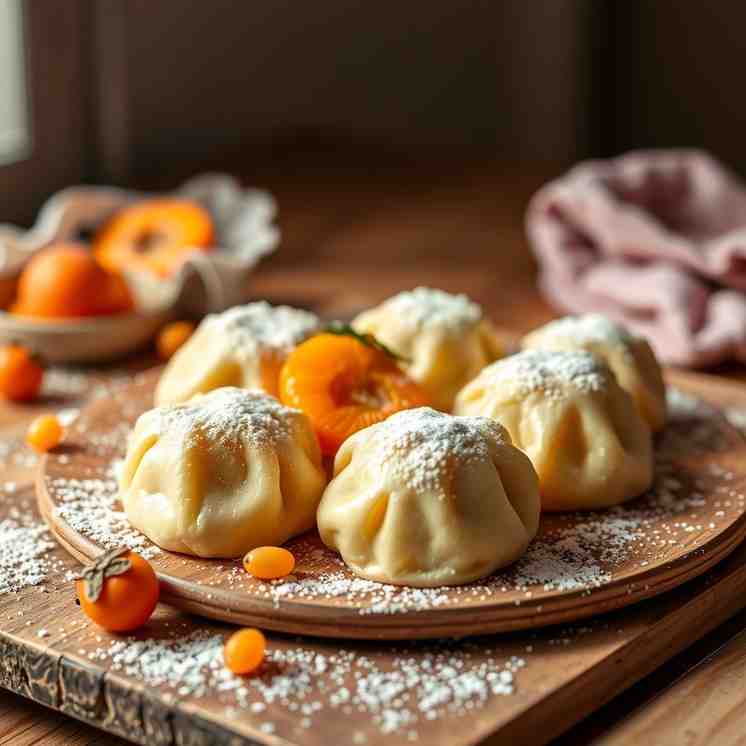
Welcome to the delightful world of Austrian Apricot Dumplings, or as they're lovingly known in their homeland, ``Marillenknödel``! Imagine soft, pillowy dumplings made from a creamy, tender dough, wrapped around a whole, ripe apricot, then gently boiled and rolled in fragrant, buttery breadcrumbs. This isn't just a dessert; it's a hug on a plate, a taste of ``traditional Austrian comfort food`` that works equally well as a light sweet dinner or a special treat.
We've meticulously crafted this ``apricot dumplings recipe`` to bring the authentic flavors of Austria right to your kitchen. You'll love this recipe because:
It features a single, well-tested dough formula that's tender and easy to handle.
All ingredients and measurements are US-friendly (both cups and grams!).
We provide clear, ``step-by-step instructions`` and ``cooking tips`` to ensure your success.
The taste? Exactly like the traditional version you'd get in Austria, especially from the apricot-rich Wachau Valley.
This comprehensive guide will help you master this ``dessert food`` with confidence, whether you're a beginner or an experienced baker.
Ingredients
Directions
- Make the Cheese Dough In a mixing bowl, cream together the softened unsalted butter, granulated sugar, vanilla extract, and a pinch of salt until the mixture is smooth and fluffy. Next, beat in the large egg and your soft white cheese (Topfen/quark or the Greek yogurt + cream cheese mix) until well combined. Finally, gently fold in the all-purpose flour until a soft, slightly sticky dough forms. It should hold together but still feel quite moist. Shape the dough into a flat disk, wrap it tightly in plastic, and chill it in the refrigerator for a minimum of 30-60 minutes. This chilling time is crucial as it firms up the dough, making it much easier to handle and less sticky, which leads to better structure in your finished dumplings.
- Prep the Apricots Carefully wash and thoroughly dry all your small to medium ripe apricots. Using a small, sharp knife, cut along the natural seam of each apricot just enough to gently remove the pit, trying to keep the two halves attached. Into the cavity where the pit once was, tuck a sugar cube or a small spoonful (1-2 teaspoons) of granulated sugar or apricot jam. Gently press the apricot halves back together to enclose the sugar.
- Shape the Dumplings Retrieve your chilled dough from the refrigerator. Divide the dough into equal portions, corresponding to the number and size of your prepared apricots. Lightly flour your hands and your work surface to prevent sticking. Take one portion of dough and flatten it into a thick, even disk (about 3-4 inches in diameter). Place a prepared apricot in the very center of the dough disk. Carefully wrap the dough around the apricot, ensuring it's completely enclosed. Pinch the seams together firmly to seal. Gently roll the dumpling between your hands to form a smooth, round ball with no visible seams. Place the shaped dumpling on a lightly floured plate or tray. Repeat with the remaining dough and apricots, keeping the shaped dumplings chilled while you work on the rest.
- Boil the Dumplings Bring a large pot of lightly salted water to a rolling boil. Once boiling, reduce the heat to a steady, gentle simmer – you want small bubbles, not a vigorous boil, to prevent the dumplings from breaking apart. Carefully add the shaped dumplings to the simmering water in batches, ensuring they have enough room to float freely without overcrowding the pot. After a minute or two, gently nudge the dumplings off the bottom of the pot with a slotted spoon to prevent them from sticking. Cook the dumplings until they float to the surface and then continue cooking for an additional 8-10 minutes (depending on size) to ensure the apricot inside is tender and the dough is fully cooked. Lift the cooked dumplings out of the water with a slotted spoon and drain them briefly.
- Make the Buttery Breadcrumb Coating While your dumplings are cooking, melt the unsalted butter in a large skillet over medium-low heat. Add the fine, unseasoned breadcrumbs to the melted butter. Toast the breadcrumbs, stirring constantly, until they turn a beautiful golden brown and become wonderfully fragrant. This usually takes about 5-7 minutes. Remove the skillet from the heat, then stir in the sugar (brown or white) and the optional pinch of ground cinnamon. Adding the sugar off the heat prevents it from caramelizing too hard.
- Coat and Serve As soon as the dumplings are cooked and drained, gently roll them in the warm, buttery breadcrumb coating until they are evenly coated on all sides. Transfer the coated ``Marillenknödel`` to individual plates, adding any extra breadcrumbs on top for good measure. Finish with a generous dusting of powdered sugar. Serve immediately and enjoy your homemade taste of Austria!
You may also like

Hey there! I’m just someone who seriously loves good food and believes that cooking doesn’t have to be complicated to be amazing. Whether it’s a quick weeknight dinner or a cozy weekend meal, I’m all about sharing easy, tasty recipes that actually work.