Mountains Civet de Jabalí Recipe – Cook Wild Boar
Mountains Civet de Jabalí Recipe – Cook Wild Boar
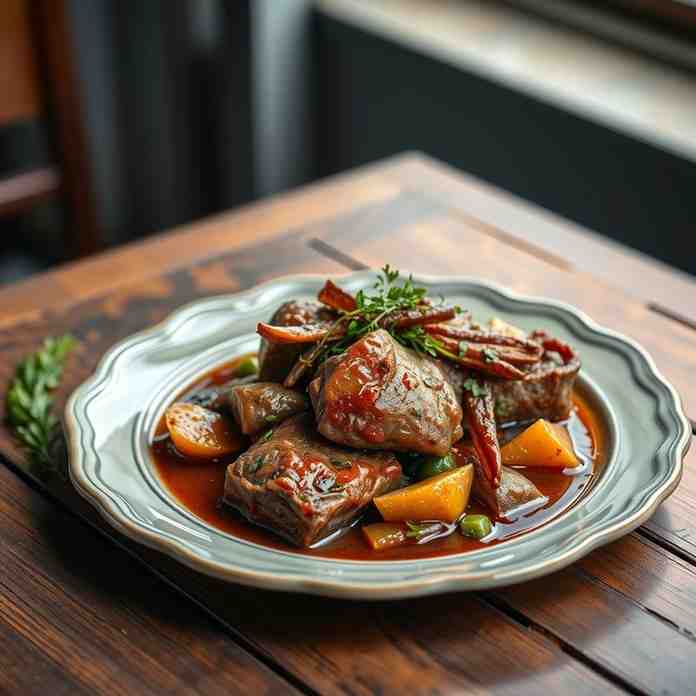
- Serves: 4 People
- Prepare Time: 30 minutes
- Cooking Time: 2.5 - 3.5 h
- Calories: -
- Difficulty: Medium
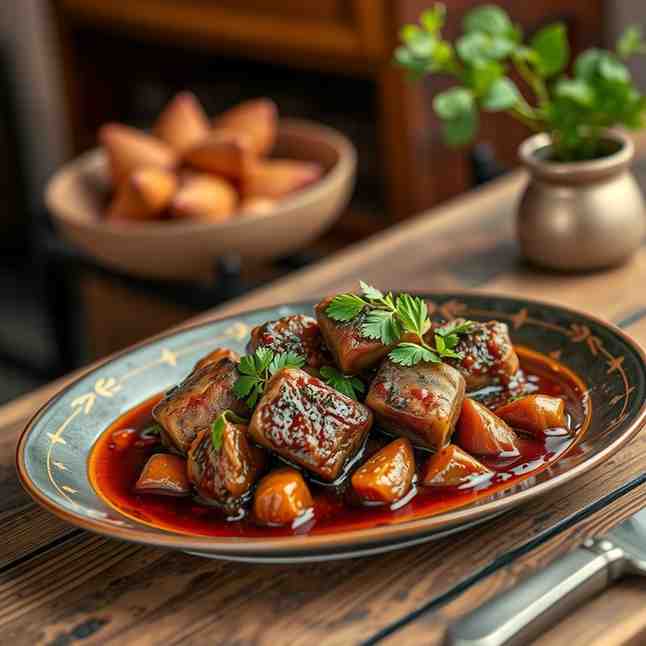
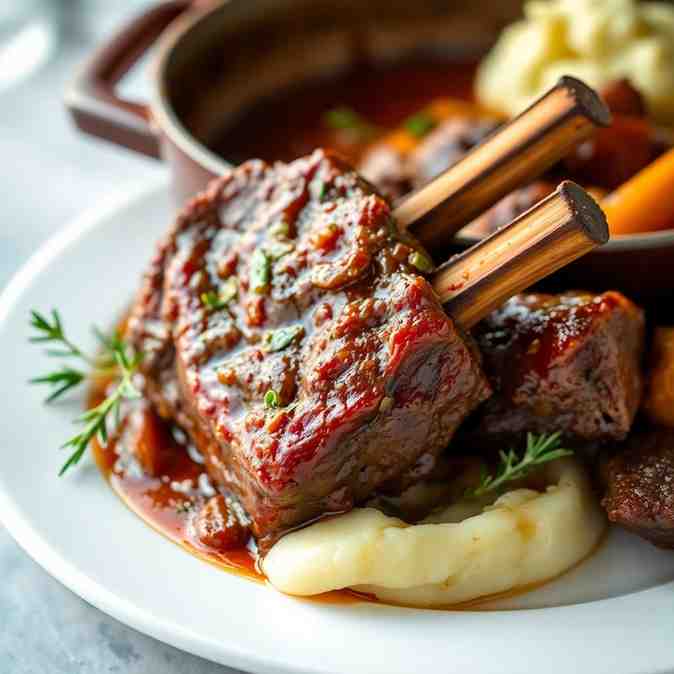
Welcome, fellow food adventurers! If you're looking to dive into a truly spectacular and deeply flavorful dish, you've landed in the right spot. Today, we're tackling Civet de Jabalí recipe, a traditional wild boar stew that's a true taste of the mountains, especially popular in places like Andorra and the Pyrenees.
So, what exactly is a "civet"? In classic French cooking, a civet refers to a rich, often wine-marinated game stew, traditionally thickened with blood (though we're skipping that part for our home kitchen version!). When Spanish and Catalan cooks apply this technique to jabalí (that's wild boar!), you get something truly special: incredibly tender meat steeped in a savory, aromatic red wine sauce. And our twist? A bright, tangy quince aioli that cuts through the richness beautifully, inspired by traditional Spanish recipes but presented here in clear, everyday English.
Worried about cooking wild boar? Don't be! With our step-by-step guide, you absolutely can make this impressive dish right at home in your trusty Dutch oven. You're going to love this Civet de Jabalí recipe for so many reasons: it offers deep, winey, slow-cooked flavors with incredibly tender wild boar, the quince-garlic "aioli" adds a unique and delightful contrast, it's perfect for making ahead for stress-free entertaining, and it's surprisingly adaptable – you can even use grocery-store pork shoulder if wild boar isn't available. Get ready for a delicious journey!
Ingredients
Directions
- Trim and Prep the Wild Boar Carefully trim any tough silver skin and large fat deposits from the wild boar meat. Silver skin can be chewy and doesn't break down during cooking. Cut the meat into uniform 1.5-2 inch cubes; this ensures even cooking. If you're working with true hunted meat, quickly check for any tiny shot fragments – better safe than sorry!
- Build the Red-Wine Marinade In a large mixing bowl or non-reactive container, combine the red wine, chopped onion, carrots, leek/celery, smashed garlic, thyme sprigs, bay leaves, peppercorns, and optional cinnamon. Season lightly with a pinch of salt and pepper. Add the trimmed wild boar cubes to the marinade, ensuring all the meat is submerged. Cover and refrigerate for a minimum of 6-8 hours, ideally overnight (12-18 hours). You can marinate for up to 24 hours, but beyond that, the flavors can become overwhelmingly acidic.
- Drain, Pat Dry, and Brown the Meat Once marinated, remove the boar from the liquid and pat the meat thoroughly dry with paper towels. This step is crucial for achieving a good sear! Strain the marinade, reserving both the liquid and the marinated vegetables separately. Lightly dredge the dried boar cubes in flour, shaking off any excess. Heat olive oil (and optional pork fat or butter) in your heavy Dutch oven or oven-safe pot over medium-high heat until shimmering. Brown the meat in batches, ensuring not to crowd the pan. You want a deep, golden-brown crust on all sides – this is where much of your flavor and color will come from! Remove browned meat and set aside.
- Sauté the Aromatics and Deglaze Using the same pot with any residual fat, add the reserved marinated vegetables. Sauté them over medium heat for 8-10 minutes until they soften and turn golden brown. Pour in a splash (about 1/2 cup) of the reserved wine marinade and scrape up any browned bits from the bottom of the pot with a wooden spoon. This "deglazing" adds incredible flavor.
- Long, Gentle Braise Return the browned wild boar to the pot. Pour in the remaining reserved marinade liquid and the beef or chicken stock/broth. The liquid should mostly cover the meat; add a little more stock if needed. Bring the stew to a gentle simmer on the stovetop. Cover the pot with a tight-fitting lid and transfer it to a preheated oven at 300°F (150°C), or reduce the stovetop heat to low to maintain a bare simmer. Cook for approximately 1.5-2.5 hours, or until the wild boar is fork-tender. The exact time depends on the cut and age of the boar; test for doneness by easily piercing a piece with a fork.
- Strain and Finish the Sauce Once the meat is tender, carefully remove it from the pot using a slotted spoon and set aside. Strain the cooking liquid through a fine-mesh sieve into a clean saucepan, pressing firmly on the cooked vegetables in the sieve to extract all their flavorful juices. Discard the solids. Bring the strained sauce to a gentle simmer over medium heat and reduce it until it thickens slightly and coats the back of a spoon – this might take 15-20 minutes. If using, stir in the small knob of butter or tiny square of dark chocolate until melted and fully incorporated for extra shine and depth. Taste and adjust seasoning with salt and pepper as needed. Return the cooked wild boar to the finished sauce briefly to warm through.
- Make the Quince Aioli While the stew is braising or the sauce is reducing, prepare the quince aioli. Cook the peeled, chopped quince in a small pot with just enough water to cover it, until it's very tender (about 15-20 minutes). Drain the quince extremely well. In a blender or food processor, combine the cooked quince, peeled garlic cloves, a pinch of salt, and the olive oil. Blend until you have a thick, spoonable purée – it should be spreadable but soft. Adjust with lemon juice or vinegar to brighten the flavor. Remember, this is a rustic quince-garlic sauce, not a classical emulsified French aioli, so its texture will be more like a thick fruit butter.
- Rest and Serve Once the stew is finished, let it rest for 10-15 minutes off the heat. This allows the flavors to meld and any excess fat to rise to the surface for easy skimming if desired. Serve the hot Civet de Jabalí in warm bowls, with a generous spoonful or quenelle of the quince aioli on top or alongside. Garnish with fresh chopped parsley or chives.
Mountains Civet de Jabalí Recipe – Cook Wild Boar
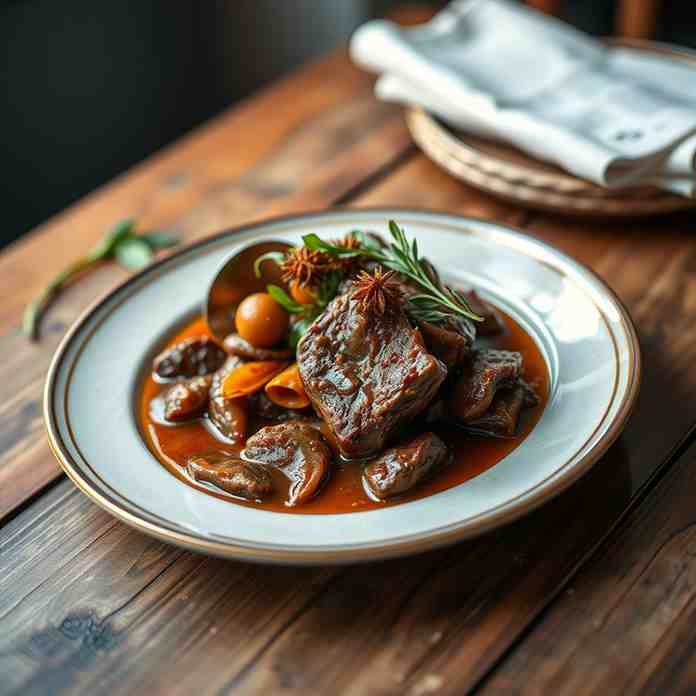
- Serves: 4 People
- Prepare Time: 30 minutes
- Cooking Time: 2.5 - 3.5 h
- Calories: -
- Difficulty: Medium
Welcome, fellow food adventurers! If you're looking to dive into a truly spectacular and deeply flavorful dish, you've landed in the right spot. Today, we're tackling Civet de Jabalí recipe, a traditional wild boar stew that's a true taste of the mountains, especially popular in places like Andorra and the Pyrenees.
So, what exactly is a "civet"? In classic French cooking, a civet refers to a rich, often wine-marinated game stew, traditionally thickened with blood (though we're skipping that part for our home kitchen version!). When Spanish and Catalan cooks apply this technique to jabalí (that's wild boar!), you get something truly special: incredibly tender meat steeped in a savory, aromatic red wine sauce. And our twist? A bright, tangy quince aioli that cuts through the richness beautifully, inspired by traditional Spanish recipes but presented here in clear, everyday English.
Worried about cooking wild boar? Don't be! With our step-by-step guide, you absolutely can make this impressive dish right at home in your trusty Dutch oven. You're going to love this Civet de Jabalí recipe for so many reasons: it offers deep, winey, slow-cooked flavors with incredibly tender wild boar, the quince-garlic "aioli" adds a unique and delightful contrast, it's perfect for making ahead for stress-free entertaining, and it's surprisingly adaptable – you can even use grocery-store pork shoulder if wild boar isn't available. Get ready for a delicious journey!
Ingredients
Directions
- Trim and Prep the Wild Boar Carefully trim any tough silver skin and large fat deposits from the wild boar meat. Silver skin can be chewy and doesn't break down during cooking. Cut the meat into uniform 1.5-2 inch cubes; this ensures even cooking. If you're working with true hunted meat, quickly check for any tiny shot fragments – better safe than sorry!
- Build the Red-Wine Marinade In a large mixing bowl or non-reactive container, combine the red wine, chopped onion, carrots, leek/celery, smashed garlic, thyme sprigs, bay leaves, peppercorns, and optional cinnamon. Season lightly with a pinch of salt and pepper. Add the trimmed wild boar cubes to the marinade, ensuring all the meat is submerged. Cover and refrigerate for a minimum of 6-8 hours, ideally overnight (12-18 hours). You can marinate for up to 24 hours, but beyond that, the flavors can become overwhelmingly acidic.
- Drain, Pat Dry, and Brown the Meat Once marinated, remove the boar from the liquid and pat the meat thoroughly dry with paper towels. This step is crucial for achieving a good sear! Strain the marinade, reserving both the liquid and the marinated vegetables separately. Lightly dredge the dried boar cubes in flour, shaking off any excess. Heat olive oil (and optional pork fat or butter) in your heavy Dutch oven or oven-safe pot over medium-high heat until shimmering. Brown the meat in batches, ensuring not to crowd the pan. You want a deep, golden-brown crust on all sides – this is where much of your flavor and color will come from! Remove browned meat and set aside.
- Sauté the Aromatics and Deglaze Using the same pot with any residual fat, add the reserved marinated vegetables. Sauté them over medium heat for 8-10 minutes until they soften and turn golden brown. Pour in a splash (about 1/2 cup) of the reserved wine marinade and scrape up any browned bits from the bottom of the pot with a wooden spoon. This "deglazing" adds incredible flavor.
- Long, Gentle Braise Return the browned wild boar to the pot. Pour in the remaining reserved marinade liquid and the beef or chicken stock/broth. The liquid should mostly cover the meat; add a little more stock if needed. Bring the stew to a gentle simmer on the stovetop. Cover the pot with a tight-fitting lid and transfer it to a preheated oven at 300°F (150°C), or reduce the stovetop heat to low to maintain a bare simmer. Cook for approximately 1.5-2.5 hours, or until the wild boar is fork-tender. The exact time depends on the cut and age of the boar; test for doneness by easily piercing a piece with a fork.
- Strain and Finish the Sauce Once the meat is tender, carefully remove it from the pot using a slotted spoon and set aside. Strain the cooking liquid through a fine-mesh sieve into a clean saucepan, pressing firmly on the cooked vegetables in the sieve to extract all their flavorful juices. Discard the solids. Bring the strained sauce to a gentle simmer over medium heat and reduce it until it thickens slightly and coats the back of a spoon – this might take 15-20 minutes. If using, stir in the small knob of butter or tiny square of dark chocolate until melted and fully incorporated for extra shine and depth. Taste and adjust seasoning with salt and pepper as needed. Return the cooked wild boar to the finished sauce briefly to warm through.
- Make the Quince Aioli While the stew is braising or the sauce is reducing, prepare the quince aioli. Cook the peeled, chopped quince in a small pot with just enough water to cover it, until it's very tender (about 15-20 minutes). Drain the quince extremely well. In a blender or food processor, combine the cooked quince, peeled garlic cloves, a pinch of salt, and the olive oil. Blend until you have a thick, spoonable purée – it should be spreadable but soft. Adjust with lemon juice or vinegar to brighten the flavor. Remember, this is a rustic quince-garlic sauce, not a classical emulsified French aioli, so its texture will be more like a thick fruit butter.
- Rest and Serve Once the stew is finished, let it rest for 10-15 minutes off the heat. This allows the flavors to meld and any excess fat to rise to the surface for easy skimming if desired. Serve the hot Civet de Jabalí in warm bowls, with a generous spoonful or quenelle of the quince aioli on top or alongside. Garnish with fresh chopped parsley or chives.
You may also like

Hey there! I’m just someone who seriously loves good food and believes that cooking doesn’t have to be complicated to be amazing. Whether it’s a quick weeknight dinner or a cozy weekend meal, I’m all about sharing easy, tasty recipes that actually work.